




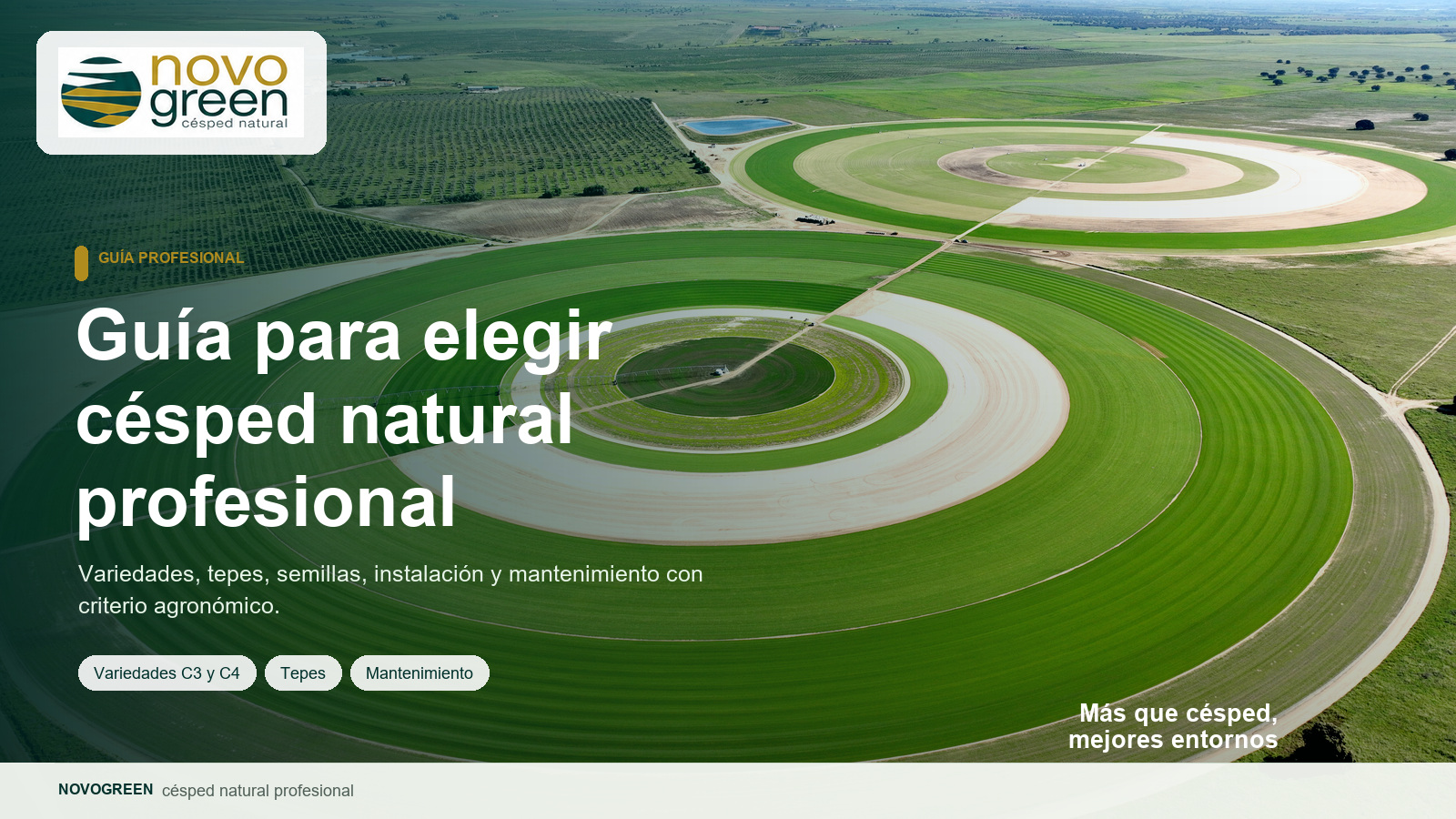
Professional guide
Choosing natural grass with professional criteria It requires looking far beyond the color, texture, or price of a variety. A turfgrass is a living system in which genetics, climate, soil, water, radiation, usage intensity, planting system, and management interact. When one of these variables is ignored, the result may be satisfactory for the first few weeks but, in the medium term, lose density, uniformity, or resilience.
Therefore, the technical question is not "which is the best grass?", but «"What plant material can maintain the performance I need under the actual conditions of this project?"». The answer varies depending on whether it's a residential garden, a public green space, a resort, a football pitch, a golf tee, or a green subjected to millimeter-precise mowing heights. It also changes depending on factors such as shade, saline water, compacted soil, high traffic pressure, or a very short window for bringing the surface into service.
This guide organizes the decision in the same order in which it should be approached agronomically: first, the project requirements are defined; then, the group of species and the variety or mixture are selected; next, the planting system is decided; and finally, it is verified that the soil, irrigation, maintenance, and logistics are compatible with the chosen solution. The goal is not to offer universal recipes, but provide criteria to reduce uncertainty and make technically defensible decisions.
| KEY IDEA
The right variety is the one that maintains density, functionality, and quality under the actual use, climate, soil, water, and maintenance conditions available. Variety selection and management are not independent decisions. |
Table of Contents
1. Before choosing: the 7 questions that define the project
A sound choice begins by defining the intended use of the surface. Two visually similar lawns may require entirely different compositions if one will withstand thousands of footsteps per week and the other will serve an ornamental purpose. In turfgrass agronomy, the end use acts as the starting point because it determines the intensity of wear, the required recovery rate, the mowing height, the density level, the stability of the turf, and the acceptable margin of error in maintenance.
| Ask | What conditions |
| 1. What will it be used for? | Resistance, density, texture, playability, comfort and cutting height. |
| 2. How much traffic will it withstand? | Tolerance to wear, vegetative recovery and need for reseeding. |
| 3. What is the climate and exposure like? | C3/C4 choice, seasonal behavior, tolerance to heat, cold and shade. |
| 4. What is the soil like? | Rooting, aeration, drainage, infiltration, compaction and nutrition. |
| 5. What water will be available? | Water demand, salinity, irrigation frequency and salt leaching strategy. |
| 6. What maintenance is feasible? | Mowing frequency, fertilization, aeration, scarifying and operating cost. |
| 7. When should it be usable? | Sod, seed, cutting, planting time and logistics. |
Usage, traffic pressure and level of demand
In a family garden, one usually looks for balance between aesthetics, feel, resistance and ease of maintenance. In a hotel or residential community, there is the added need to maintain a consistent appearance during peak occupancy periods. In a public park, mechanization, water availability, and cost per square meter come into play. In sports, the demands increase: the surface must withstand repeated wear and tear, quickly recover its coverage, and maintain functional properties under a schedule that rarely accommodates the plant's physiological needs.
It is advisable distinguish wear resistance from recovery capacity. One species may tolerate trampling well due to its density and architecture, but regenerate slowly when it loses cover; another may suffer visible damage and yet recover quickly thanks to stolons or rhizomes. This difference is crucial in football, golf, training areas, and highly concentrated access points and pathways.
Climate and seasonal behavior
Air and soil temperature influence the metabolic activity of the turf. Cool-season species maintain better activity within moderate temperature ranges, while warm-season species exhibit their maximum growth under high temperatures and intense sunlight. In Spain, and especially in Mediterranean and transitional zones, the selection should consider the species' performance throughout the year, rather than judging it based on a single season. A C4 species may lose color or enter dormancy during the cold period, but during the warmer months, it operates precisely within its most efficient range: it tolerates heat stress better, may require less water than a less adapted C3 species, and, in many varieties, maintains a high capacity for recovery from wear and tear. Dormancy should be considered as one more factor in the decision, along with the actual land use, the local climate, resource consumption, and the performance requirements for each season.
Soil, drainage and water
The soil must be analyzed as a physical and chemical medium. Texture, structure, porosity, pH, organic matter, salinity, effective depth, and compaction all influence the volume of soil that roots can explore. A profile with poor aeration or drainage limits the root system, reduces irrigation efficiency, and increases vulnerability to stress and disease. Similarly, very sandy soil offers rapid drainage but stores less water and nutrients than soil with a higher fine fraction, so management practices must be adapted accordingly.
Water quality can also be a determining factor. Electrical conductivity, salt concentration, sodium, and bicarbonates influence irrigation management and species selection. In coastal areas or facilities with limited water quality, species like Paspalum vaginatum are of interest due to their high salinity tolerance, while other species may require higher quality water or more demanding salt leaching strategies.
Maintenance and operating costs
There is no such thing as "zero-maintenance" lawns. There are different species and varieties with varying growth rates, mowing requirements, nutrition needs, and water requirements. Planned maintenance should be part of the selection process from the outset.. Choosing a surface that requires frequent mowing, precise fertilization, or intensive cultivation for a project that lacks those resources creates future problems. Similarly, indiscriminately reducing maintenance without adjusting quality standards leads to loss of density, thatch buildup, compaction, or seasonal deterioration.
| QUICK DECISION
Before asking about a variety, define: use + traffic + climate + exposure + soil + water + maintenance level + timeframe. This information drastically reduces the number of technically reasonable options. |
2. What type of grass to choose: C3, C4 species, varieties and mixtures
The classification between C3 and C4 species It is one of the most useful tools for understanding turfgrass behavior. It is not a marketing label, but rather a physiological difference in the carbon fixation pathway that translates into distinct responses to temperature, radiation, water, and season. In practical terms, it allows us to anticipate when a species will be actively growing, when it will lose vigor, and what type of management it may need.
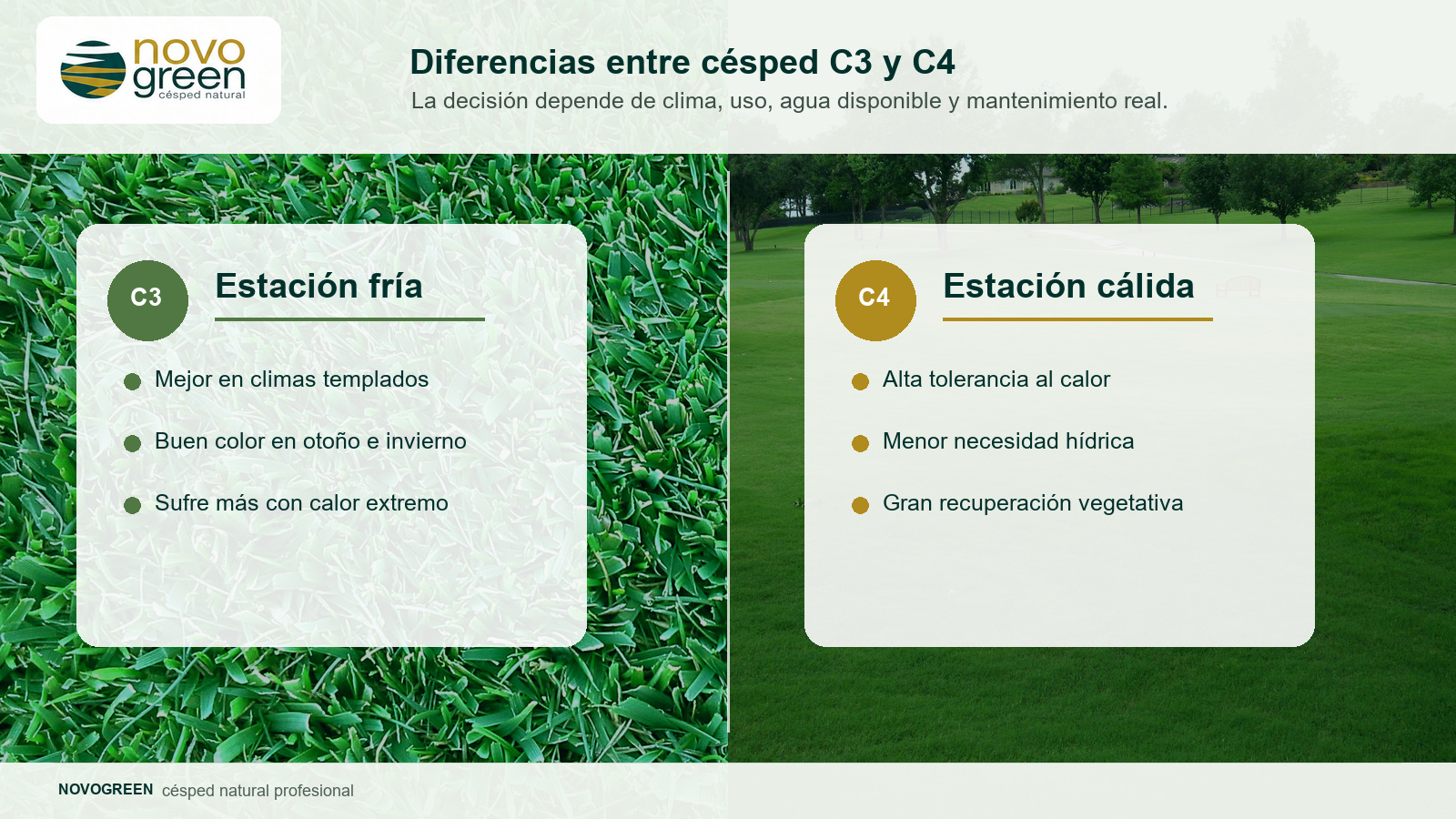
C3 turf: activity with moderate temperatures
Festuca arundinacea, Lolium perenne, Poa pratensis and Agrostis stolonifera are common examples of C3 species. In general, they perform best in moderate temperatures and maintain activity during periods when many C4 species reduce their growth. Within this group, there are important differences: Tall fescue (Festuca arundinacea) stands out for its deep root system and adaptability; perennial ryegrass (Lolium perenne) for its rapid germination and usefulness in overseeding; Kentucky bluegrass (Poa pratensis) for its rhizomatous growth and ability to restore ground cover; and bentgrass (Agrostis) for its adaptation to very low mowing and intensive management, especially in golf courses.
C4 turf: heat efficiency and high radiation
Bermuda grasses of the genus Cynodon, zoysias, and paspalum are C4 species. Their metabolism is adapted to high temperatures and high radiation, therefore During the warm season they can develop very intense vegetative activity and use water very efficiently compared to species less adapted to these conditions. This adaptation is not limited to water consumption: in well-selected projects, it can translate into greater heat tolerance, less pressure from certain summer health problems, a reduced need for corrective interventions, and a greater capacity to maintain functionality under stress.
Another important agronomic advantage is its vegetative growth. Bermuda grass and paspalum spread via stolons and/or rhizomes and can rapidly recolonize damaged areas when actively growing. Zoysias also exhibit vegetative growth and form very dense mats, although the recovery rate can be slower depending on the variety. This regenerative capacity reduces the need for continuous reseeding when the weather allows the plant to be active.
From this perspective, The sustainability of a C4 surface should not be reduced to water conservation.. Climate adaptation, pesticide and fertilization needs, the frequency of certain maintenance operations, and the turf's ability to recover after use also play a role. Choosing a species physiologically adapted to the climate is usually more efficient than trying to maintain one outside its optimal range through constant increases in water, nutrients, or treatments.
Winter dormancy remains a characteristic that needs explaining. With the drop in temperature, C4 plants reduce their growth and, depending on the species, variety, and location, may lose color. However, this behavior must be analyzed within the annual balance. In gardens, swimming pools, hotels, resorts, and numerous green spaces, peak usage periods coincide with the hottest months, precisely when a C4 plant is at its most active. A C3 plant may retain its winter color better, but during long, hot summers, it may suffer greater heat stress, increase its water requirements, and become more susceptible to certain diseases. Therefore, the correct approach is not to automatically avoid dormancy, but rather to assess the performance needs in each season and the resource consumption required to achieve them.
Within the C4 group, a single, uniform behavior is not appropriate. Bermuda grasses are notable for their rapid growth and recovery during the active growing season; zoysia grasses tend to form very dense mats and exhibit more controlled growth rates; and Paspalum vaginatum is of particular interest when soil or water salinity is a limiting factor. Furthermore, not all bermudagrasses or zoysia grasses behave the same way: varietal differences can be decisive in cold and drought tolerance, density, texture, recovery rate, disease resistance, and mowing height.
Variety matters as much as species.
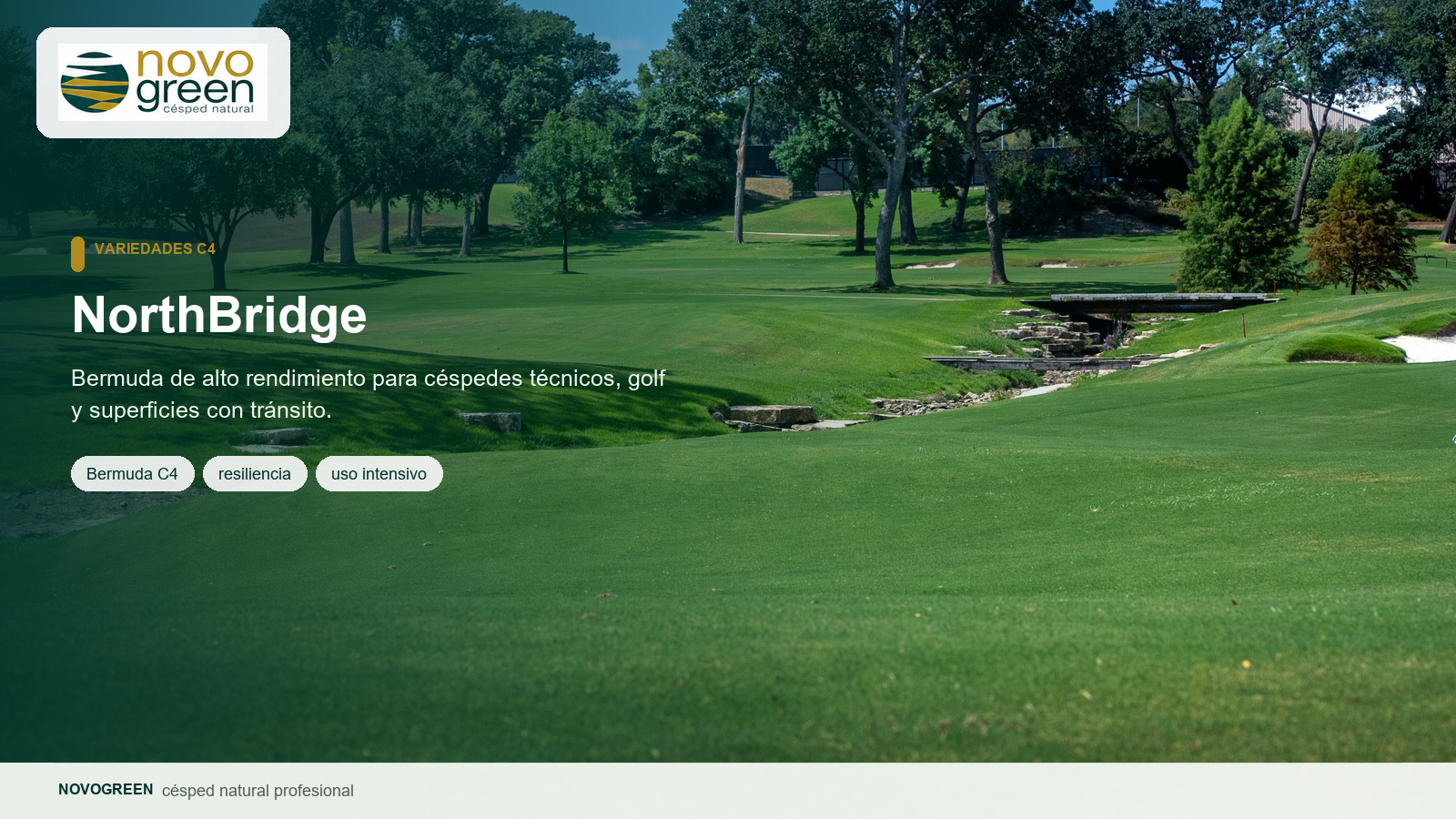
In professional turfgrass, simply saying "Bermuda" may not be enough. Performance varies significantly between cultivars. Latitude 36, for example, stands out for its cold tolerance and rapid dormancy recovery among Bermuda grass varieties; NorthBridge combines mechanical strength, density, and resilience for surfaces under heavy use; and TifTuf has been selected for its drought tolerance and water efficiency. These examples illustrate why The species is only the first level of decision: The specific cultivar can modify the climatic window for use, resource consumption, recovery rate, and level of maintenance required. The same principle applies to zoysias, where different varieties exhibit significant differences in shade, texture, density, chilling tolerance, and growth rate.
| Species / group | Agronomic strength | Aspects to monitor | Frequent applications |
| Tall fescue (C3) | Deep roots, adaptation, and stability | Texture, cutting height, and summer stress | Gardening, landscaping, green areas |
| Lolium perenne (C3) | Rapid germination and establishment | Persistence depends on climate and cultivar | Reseeding, sport, mixtures |
| Poa pratensis (C3) | Rhizomes, density and recovery | Slower initial establishment | Sports and frequently used surfaces |
| Agrostis stolonifera (C3) | Very low cut quality | High precision in irrigation, mowing, and nutrition | Greens and specialized golf |
| Cynodon / Bermuda (C4) | Heat, water efficiency, transit and rapid recovery during active growth | Dormancy varies depending on variety and location; shade tolerance varies among cultivars | Gardening, landscaping, residential, hotels and resorts, green areas, sports and golf in warm and transitional climates |
| Zoysia spp. (C4) | Density, heat, and slower growth rate | Slower recovery in some varieties | Gardening, resorts, golf and landscaping |
| Paspalum vaginatum (C4) | Very high tolerance to salinity | Specific handling according to use and water quality | Coast, golf, sport and landscaping |
Pure variety, blend or custom formulation
A pure variety provides a more defined genetic identity and behavior. A mixture attempts to take advantage of the complementarity between species or cultivars. The decision must consider both establishment and subsequent evolution: the initial proportions do not guarantee that the composition will remain unchanged, because each component responds differently to climate, mowing height, fertilization, irrigation, and usage pressure.
In professional seed, varietal identity, purity, germination, freshness, origin and traceability are important.
| AGRONOMIC CRITERIA
Don't just compare species. Compare specific cultivars, their adaptation to the area, the intended mowing height, the level of use, and the available management options. In professional turfgrass, the variety can significantly alter the performance of even a single species. |
3. Turf, seeds or cuttings: choose the planting system
The species answers the question "what plant material," while the planting system answers "how to establish it." Sod, seeds, and cuttings are not equivalent alternatives, nor do they transfer the same level of uncertainty to the project.
Sods: developed coverage and control of initial establishment
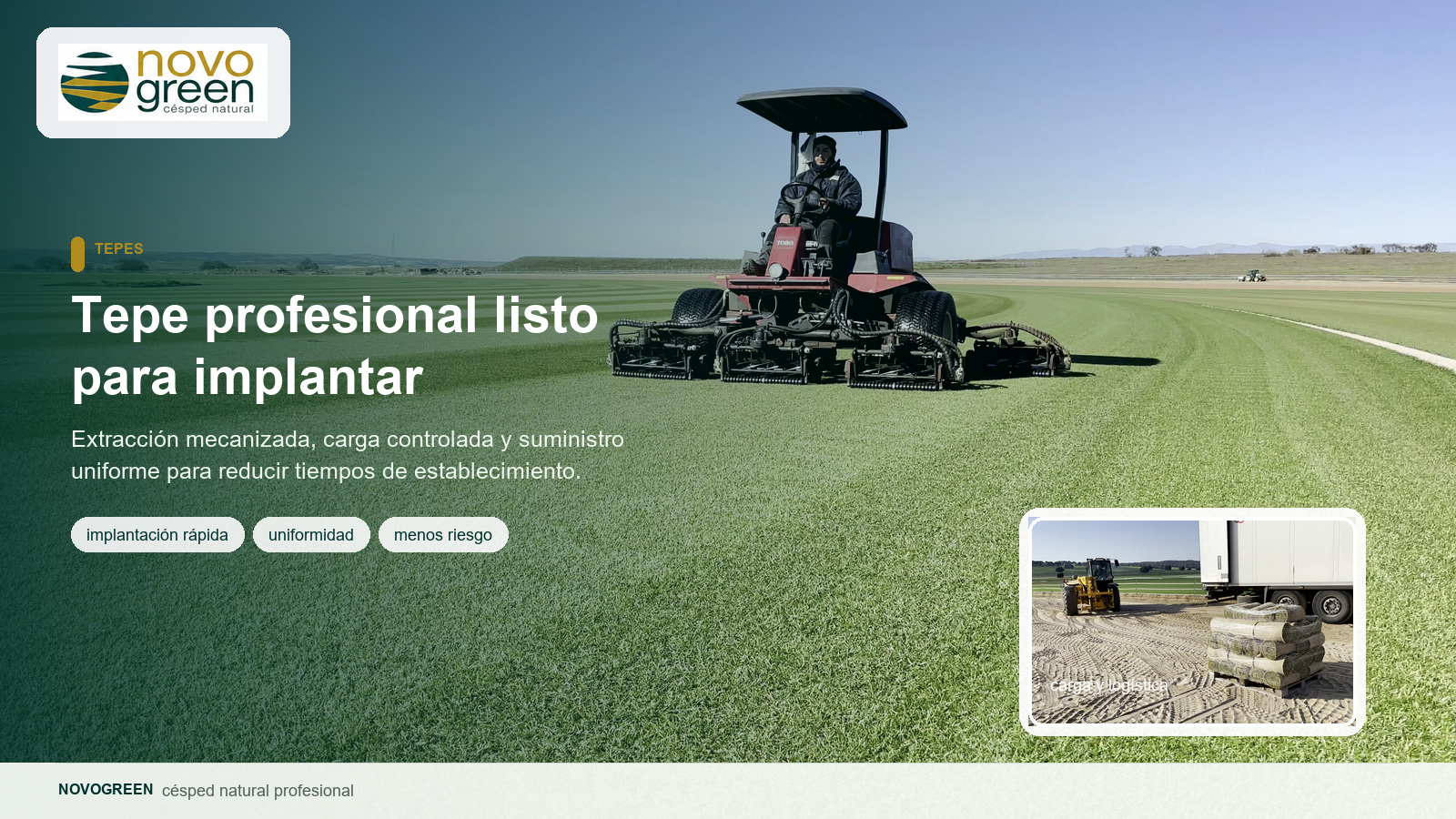
The sod is a previously cultivated plant cover It is extracted with a layer of substrate and part of the root system for transport to its final location. Its main advantage is that the site receives a fully formed pasture: with density, maturity, homogeneity, and varietal identity previously developed on the production farm.
This considerably reduces the uncertainty of establishment. Compared to a surface established from seed, it decreases the risk of germination failures, irregular emergence, early weed infestation, surface erosion, runoff from rain, seed loss, the need for reseeding, and heterogeneity during the early stages. In landscaping, where the conditions and time for professional-level precision in sowing are not always available, achieving a lawn with the density and uniformity of a good turf roll using only seed can be particularly challenging.
The speed, therefore, is not merely visual. From day one, the turf provides a functional and well-developed ground cover, concentrating the critical phase of the project on root establishment in the new soil. Proper soil preparation, ensuring close contact between the turf and the receiving soil, and managing irrigation during establishment are still necessary, but the process begins with a mature plant, not a seedling that still needs to develop its full cover.
Seed: formulation flexibility and establishment from scratch
Sowing allows for the selection of pure varieties or mixtures and the construction of the cover crop directly on the ground. It is a perfectly valid option when the project has the appropriate timing, establishment time, irrigation control, and the capacity to protect the surface during germination and emergence. Its success depends on the preparation of the seedbed, seed-to-soil contact, temperature, humidity, and the management of weeds and erosion during the early stages. Compared to turf, the consolidation period is longer And the final homogeneity depends largely on all these variables remaining within favorable ranges. Furthermore, seed is essential for reseeding and overseeding, and offers formulation flexibility that turf cannot always provide.
On sports surfaces, Reseeding is used to restore density after depletion. In C4 turfgrass, superseeding with C3 species can be used to maintain coverage and color during periods of low activity of the warm-season grass, provided the subsequent transition is planned. These strategies should not be applied automatically: they introduce competition between species and modify mowing, fertilization, and management requirements.
Cuttings and vegetative implantation techniques
Some species and varieties are propagated vegetatively using cuttings. This method can be efficient in large areas, especially in golf, polo, and landscaping, when suitable machinery and an active growing window are available. NOVOGREEN also works with implantation techniques such as No-Till, These methods involve inserting cuttings through incisions in the soil to renew the species without physically removing the existing ground cover. It is a specialized tool that should be evaluated based on the surface area, the existing species, and the renewal objective.
| Criterion | Turf | Seed | Cutting |
| Initial Coverage | Already formed, dense and homogeneous vegetation cover | Progressive | Progressive |
| Critical process | Rooting | Germination + establishment | Root, stolon/rhizome sprouting |
| Term of use | Light use practically immediately; intensive use after rooting | More dependent on species and season | Dependent on active growth |
| Genetic flexibility | Varieties available in production | Very high | Linked to vegetative varieties |
| Logistics | High | Moderate | High in large stores |
| Applications | Construction, gardens, landscaping, green areas, sports and rapid renovation | Planting, reseeding and overseeding | Golf, sports and large stores |
| Risks during establishment | Minor benefits: it starts from an existing cover crop; it reduces germination failures, erosion, weeds and reseeding | Major issues: germination, emergence, weeds, erosion, and possible reseeding | Dependent on the growth window and the closing of the canopy |
4. Choose according to use: garden, landscaping, public spaces and sports
An effective way to select turf is to translate its intended use into measurable performance characteristics. The type of user, traffic intensity, mowing height, desired aesthetics, and available maintenance window allow you to prioritize certain features over others. It's not about assigning a fixed species to each use, but rather about... identify which properties should dominate the decision.
Residential and premium gardens
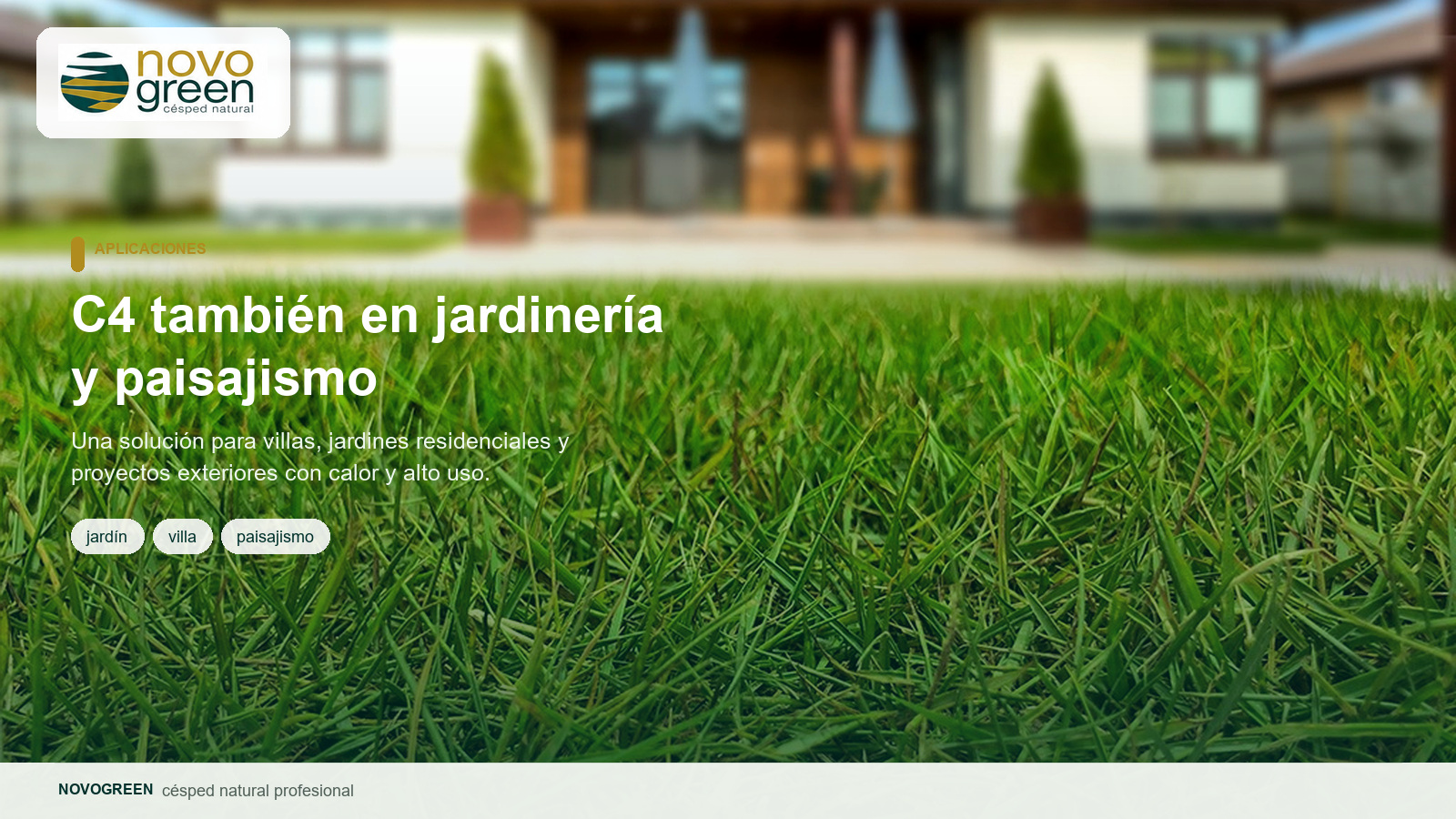
In a family garden, the surface area must withstand daily use, play, movable furniture, and repeated foot traffic. without requiring a level of maintenance typical of a sports facility. If pets, a swimming pool, or narrow walkways are present, soil compaction and localized wear become more important. In premium gardens, fine texture, density, uniformity, and visual stability are also valued. Zoysias can be attractive in suitable climates due to their density and slower growth rate, but certain modern Bermuda grass varieties can also be very well-suited to gardening, residential landscaping, hotels, and resorts when there is good sunlight and the expected winter performance is compatible with the project. Limiting Bermuda grass to football, golf, or the southern Iberian Peninsula excludes a significant portion of its current applications. Certain C3 mixtures, meanwhile, offer good winter color and adaptability to temperate zones.
Choosing the right lawn for a garden You must take exposure into account. A lawn chosen for its heat tolerance may not be suitable for a heavily shaded area. Similarly, a high-quality ornamental grass may prove inefficient if it requires a mowing frequency or fertilization that the user is unwilling to maintain.
Parks, town halls and large green areas
In public spaces, operational efficiency is gaining importance. The real cost is not the initial price per square meter, but the cost of maintaining functional coverage for years. Water requirements, mowing frequency, fertilization, traffic resistance, and mechanization capacity must be analyzed from the project stage. It is common for a single green space to have areas with different needs; zoning irrigation and adjusting maintenance by zone is usually more efficient than applying the same standard to the entire area.
Football and other high-intensity sports
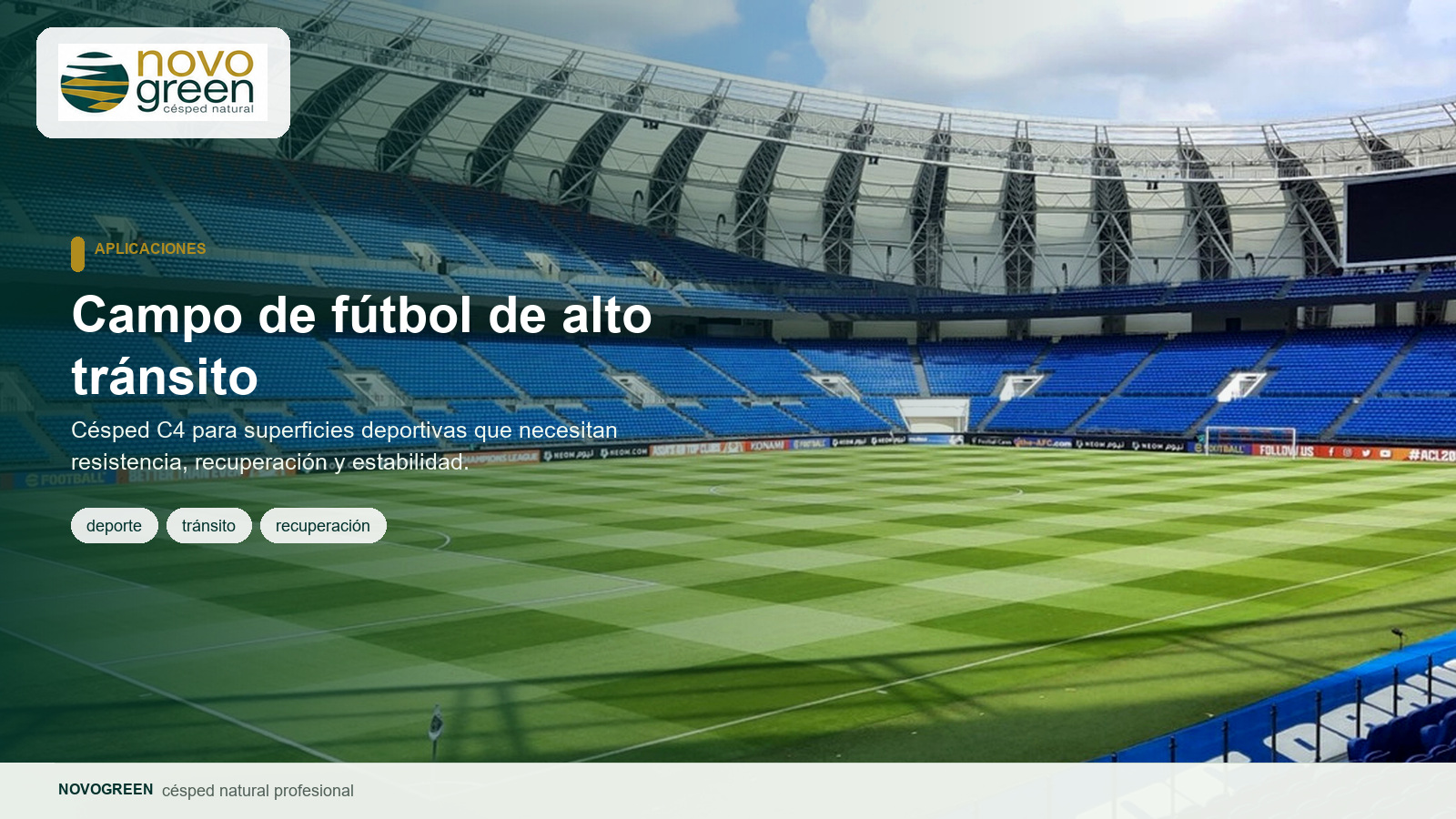
In football, rugby, and multi-purpose fields, the surface must withstand repeated shearing, tearing, and compaction forces. During the active growth period, Bermuda grass offers excellent recovery capacity thanks to its stoloniferous and rhizomatous growth. In cooler climates or seasons, C3 species and overseeding strategies can provide cover. Selection should consider match and training schedules, density, recovery rate, stability, mowing height, and the actual possibilities for aeration and overseeding.
Golf: each area is a different surface
A golf course should not be considered a single agronomic unit. Greens, approaches, tees, fairways, roughs, and practice areas all operate with very different mowing heights and traffic levels. Greens may require Agrostis stolonifera or ultradwarf Bermuda grasses capable of withstanding extremely low mowing and high-precision maintenance. On tees and fairways, wear recovery, density, and climate adaptation become more important. In coastal areas, salinity tolerance may tip the scales toward Paspalum. Therefore, varietal selection should be made by management unit rather than for the entire course.
5. Agronomic factors: heat, shade, traffic, soil, water and salinity
After defining the intended use, the environment acts as a filter. A variety may be functionally perfect but unviable due to temperature, radiation, or water quality. The analysis should focus on limiting factors: what most restricts growth usually carries more weight than a secondary advantage of the variety.
| Dominant condition | Selection priority | Associated management |
| Warm summers | Thermal adaptation, water efficiency and recovery | Adjusted watering, cutting height, and nutrition without excess |
| Shade | Ability to maintain density with less radiation | Lower traffic, slightly higher cutting height, and humidity control |
| High traffic | Wear resistance + recovery | Aeration, reseeding and localized repair |
| Compacted soil | Root capacity and adaptation | Decompaction, drainage and machinery traffic control |
| Limited water | Drought tolerance and root depth | Uniform irrigation and reduced losses |
| Salinity | Species/cultivar tolerance | EC control, drainage and salt washing where appropriate |
Mediterranean climate and heat stress
The Mediterranean climate combines summers with high evaporative demand, high radiation and periods of irregular precipitation. Under these conditions, The physiological adaptation of the species acquires special importance. Bermuda grass, zoysias, and paspalum grasses are at their most active during the months of greatest heat stress, and certain C4 varieties can combine lower water requirements, high heat tolerance, and a high capacity for vegetative recovery.
Sustainability should be assessed in terms of total resources, not just liters of water. A climate-adapted surface may require less intervention to survive the summer, exhibit less pressure from certain stress-related health problems, and recover from damage through stolons and rhizomes without constantly relying on reseeding. This can reduce water, pesticides, corrective work, and maintenance hours. Therefore, the correct comparison is not simply which lawn stays green year-round, but rather what resources each alternative needs to maintain the level of quality and functionality that the project truly demands.
Winter behavior should be incorporated into that assessment without making it the sole criterion. Bermuda grass can go dormant even in transitional areas like Madrid; fescue can retain its color better during that period. However, during a long, hot summer, the relationship can be reversed in terms of stress, water, and sanitary pressure. Furthermore, in gardens, swimming pools, hotels, resorts, and many green spaces, peak usage coincides with the season when C4 plants are most active. The goal is to evaluate the annual balance of performance and resources, not to maintain maximum growth at any cost.
Water stress begins before the surface turns completely brown. Loss of turgor, slow-healing wounds, a bluish-gray discoloration, and reduced growth are common signs. A professional strategy combines plant observation, knowledge of soil water retention capacity, meteorological data, and irrigation system uniformity.
Shade: less energy available for growth
Shade reduces photosynthetically active radiation and, therefore, the plant's ability to produce biomass. Under these conditions, recovery from traffic is reduced and The importance of avoiding additional stress increases.. No single grass species performs equally well in deep shade as in full sun. Some zoysias exhibit a relatively higher tolerance than many bermudagrasses, and within the C3 species, there are cultivars that perform well in moderate shade. Even so, when sunlight is insufficient, the solution may involve reducing foot traffic, mowing, modifying the design, or even replacing the lawn with another type of ground cover.
Compaction, infiltration and drainage
The movement of people and machinery reduces the macroporosity of the soil, limits gas exchange, and decreases infiltration. Roots need oxygen; Saturated or compacted soil restricts plant activity and forces the plant to rely on a small root system. Varietal selection cannot compensate for a severe structural problem. Before planting, compaction, slope, and drainage should be corrected; during maintenance, aeration should be scheduled according to the degree of compaction and the period of active growth.
Salinity and water quality
Salinity affects the plant's ability to extract water from the soil and can generate specific toxicities. The diagnosis should be based on water and soil analysis., not only in visual perception. Paspalum vaginatum is recognized for its superior salinity tolerance compared to most commonly used turfgrasses; Bermuda grass and Zoysia grasses can also exhibit significant levels of tolerance depending on the variety. Management includes ensuring adequate drainage and, when water quality requires it, applying a leaching agent to displace salts from the root zone.

| DO NOT CONFUSE TOLERANCE WITH LACK OF MANAGEMENT
A species tolerant to drought, salinity, or heat does not eliminate the need for irrigation, drainage, or nutrition. Tolerance expands the operational margin, but yield still depends on management and the required quality standard. |
6. Preparation and implementation: how to build a working foundation
Future yield is largely determined before the first sod is laid or the first seed is sown. The soil profile must allow for air, water, and roots; the surface must have consistent elevations and slopes; the irrigation system must distribute water evenly; and logistics must prevent the plant material from arriving damaged. A rapid implementation on a poor foundation only makes the problem appear sooner.
Diagnosis and preparation of the terrain
When the project warrants it, a soil analysis can determine pH, salinity, and nutritional status. The physical assessment should examine texture, effective depth, compaction, and infiltration. If amendments are required, they must address a specific need. Adding sand, organic matter, or fertilizers without a soil analysis can lead to textural inconsistencies, nutrient excesses, or changes in water retention that will hinder subsequent management.
- Remove debris, stones and unsuitable materials that hinder leveling or rooting.
- Correct compaction before planting, especially after the passage of construction machinery.
- Adjust levels and slopes to avoid depressions and water accumulation.
- Check drainage and infiltration and resolve structural problems before covering the soil.
- Check irrigation coverage and uniformity before installation.
- Prepare a firm but not sealed bed, with good continuity between the surface and the root zone.
Laying turf
The turf should be installed on pre-moistened soil, avoiding mud or saturation. The pieces are laid tightly together, with staggered joints, no overlaps, and ensuring maximum contact with the ground. For large formats, the installation machinery must work precisely to avoid dragging, creases, or air pockets. Once laid, andIrrigation should be immediate and sufficient to moisten both the turf and the surface area of the receiving soil.
In warm weather, the time between extraction and installation becomes even more critical. Stacked turf can accumulate heat and quickly become stressed. Professional logistics must synchronize extraction, transport, and installation. For projects with specific phytosanitary requirements, washed turf can be an alternative, as it removes much of the adhering substrate, although its handling and installation must be adapted to the format and intended use.
Initial watering and root development
During the first few days, the goal is not to "water heavily" but to prevent the interface between the turf and the soil from drying out before rooting occurs. That's why Shorter and more frequent irrigations are usually used., adjusted for temperature, wind, soil texture, and exposure. As the roots penetrate the receiving soil, the frequency should be gradually reduced and the depth of wetting increased. Indefinitely maintaining surface irrigation promotes a shallow root system and increases dependence on irrigation.
As a practical reference used by NOVOGREEN, A newly installed surface may require several daily waterings in warm conditions during the first few days, then transition to less frequent watering, and approach a normal maintenance schedule after about 3-4 weeks. This should not be interpreted as a rigid schedule: the correct approach is to observe the soil moisture profile and the actual progress of root development.
First cut and commissioning
The first cutting should be done when the plant has sufficient development. And, in the case of turf, there must be significant anchorage to the ground. It's important to distinguish this criterion from the usability of the surface: a properly installed turf can tolerate light and careful use almost immediately, such as walking, lying down, or using a pool area, always avoiding moving pieces or subjecting them to shearing stress. Intensive use—running, spinning, sports, heavy traffic, or repeated loads—should be postponed until there is sufficient root establishment and the turf is firmly fixed to the receiving soil.
To check for rooting, gently pull on a corner to see if the roots have begun to hold the material. The lawnmower must have sharp blades., The soil should not be excessively wet, and no more than approximately one-third of the leaf length should be removed in a single mowing. This rule reduces stress and prevents scalping, which is especially dangerous during establishment.
7. Technical maintenance: irrigation, mowing, nutrition and regeneration
Maintenance must preserve the performance for which the surface was designed. It is not a fixed sequence of tasks, but a management program that responds to growth, climate, soil, and use. Irrigation, mowing, fertilization, and cultivation practices are interrelated: increasing water and nitrogen accelerates growth and may increase mowing frequency; cutting too low reduces leaf area and root system; maintaining excessive moisture can promote disease and oxygen loss in the soil.
Irrigation: decide by need, not by schedule
On established grass, Deeper and less frequent waterings tend to promote deeper roots compared to daily surface waterings.. The frequency depends on evapotranspiration, soil storage capacity, root depth, and system efficiency. Sandy soils have less available water and may require more frequent applications; clay soils retain more water but may exhibit slow infiltration and a risk of waterlogging if flow rates exceed their absorption capacity are applied.
Watering early in the morning is usually the most efficient strategy because it reduces evaporation compared to midday and limits the time of nighttime leaf wetness. In summer, NOVOGREEN Use as a guideline a total weekly application of approximately 20-25 l/m², including rainfall, for established lawns. This figure should be adjusted: it is not a universal dose and may be excessive or insufficient depending on the species, soil, climate, exposure, and desired quality.
Mowing: height, frequency and quality of cut
Mowing is one of the operations that most modifies the physiology of the plant. Removing leaf tissue temporarily reduces photosynthetic capacity; therefore, the frequency of pruning should be adjusted to the plant's growth to avoid aggressive cuts. As a general rule, no more than one-third of the leaf should be removed in a single operation. Dull blades tear the tissue, increase water loss, and worsen the appearance, while a clean cut heals more quickly.
Each species and use has its own range. Ornamental zoysias can be mowed at relatively low frequencies; sport bermudagrass requires more frequent mowing during active growth; bentgrass and ultradwarf bermudagrass on greens operate at very low heights and demand reel mowers, extreme regularity, and precise stress control. Therefore, talking about an “ideal turf height” without specifying the species and purpose is technically meaningless.
Nutrition based on growth and diagnosis
Nitrogen promotes growth and color, but an excess can produce succulent tissue, increase mowing requirements, and raise susceptibility to certain problems. Phosphorus, potassium, and micronutrients should be applied based on actual availability and the species' needs. In professional projects, soil and, when appropriate, foliar analyses help adjust the program and avoid routine applications.
Aeration, scarifying, topdressing and reseeding
Aeration relieves compaction and improves gas exchange; Scarifying acts on accumulations of organic matter or thatch; topdressing allows for the gradual modification of surface properties and maintains uniformity; reseeding restores density when ground cover has decreased. These tasks should be carried out with a specific objective and, preferably, during periods when the species can recover quickly.
Diagnosis before treatment
Spots, discoloration, or areas of low density can be caused by water deficit, excess water, compaction, mechanical damage, nutritional imbalance, pests, or diseases. Treating without a diagnosis can worsen the problem. A first level of inspection should check irrigation distribution, soil moisture, roots, the pattern of the spots, leaf condition, and their relationship to shaded or high-traffic areas. If symptoms consistent with pathogens are present, professional diagnosis and the responsible use of approved products are preferable to indiscriminate preventative applications.
8. Quality, traceability and supplier selection
In a professional project, quality goes beyond simply the turf "arriving green." The material must correspond to a specific varietal identity, have been produced under appropriate controls, exhibit sufficient uniformity, and arrive in conditions that allow for predictable establishment. For seeds, purity and germination are also crucial. In certified vegetative varieties, genetic guarantee is especially important because varietal contamination can alter the texture, color, growth, and surface performance for years.
Varietal identity and certification
Genetic assurance programs seek to preserve the identity and purity of protected varieties during their multiplication and production. NOVOGREEN produces and distributes varieties certified by ITGAP, This is especially important for Bermuda grass, Zoysia grass, and Paspalum grasses used in sports and high-demand projects. Certification does not replace proper agronomic selection, but it reduces a critical uncertainty: that the received material actually corresponds to the specified variety.
When buying seed, a professional should check the lot information, purity percentage, germination rate, date or validity of analysis, composition, and origin. The species name alone is not enough. Two cultivars of Lolium perenne or Festuca arundinacea can differ significantly in density, texture, wear tolerance, or disease resistance.
Production capacity, homogeneity and logistics
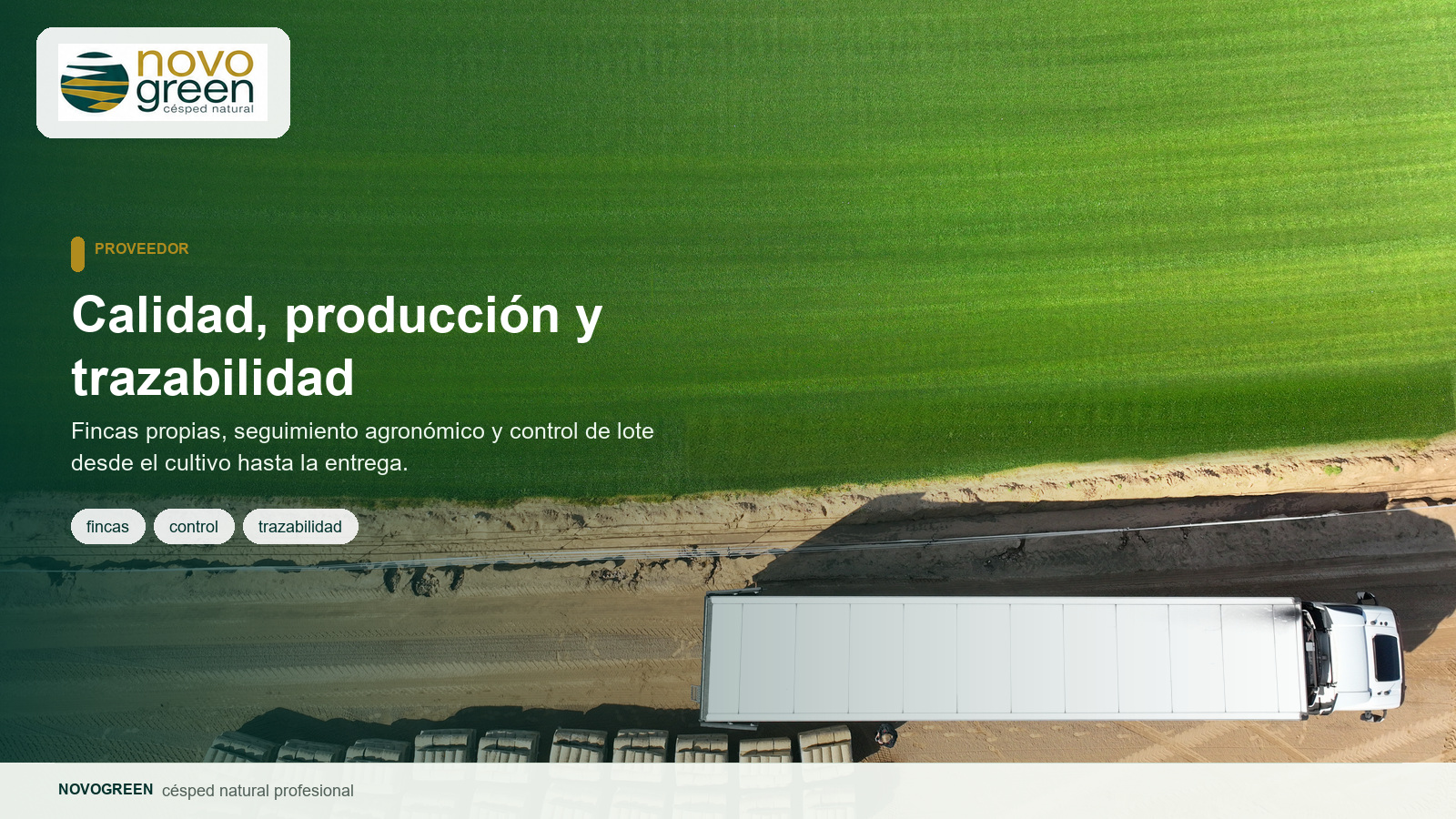
Supply capacity matters when working with large areas or very tight construction phases. NOVOGREEN cultivates more than 330 hectares spread across four farms in the Iberian Peninsula and works with around 24 varieties, This allows for the availability of materials under different soil and climate conditions. For the client, this scale only adds value if it translates into homogeneity between batches, continuity of supply, extraction planning, and logistical capacity.
What should a technical provider be able to answer?
- What species and variety do you recommend, and what project conditions justify that choice?.
- What seasonal behavior can be expected and how will it influence maintenance?.
- Which supply format is viable in terms of surface area, access, and timeframe?.
- What quality and traceability support the plant material?.
- What soil preparation and establishment management are necessary?.
- What limitations does the proposed solution have; not just what are its advantages?.
- How will production, extraction, transport and installation be coordinated in large-scale projects?.
The value of agronomic advice
The most reliable recommendation is the one that links plant material to project. A specialized supplier should be able to rule out options that aren't a good fit, even if they are technically sound in other scenarios. Delivering the material isn't the end of the project, but rather the beginning of a crucial phase for the agronomic outcome. Therefore, knowledge of planting and management, along with the ability to provide technical support to the client, is just as valuable as a wide catalog.
| NEXT STEP
To refine a recommendation, it's advisable to have, at a minimum: location, use, surface area, sun exposure, traffic intensity, soil type, water quality and availability, planned planting date, and maintenance level. With this data, a varietal solution and planting method can be defined with much greater precision. |
Frequently asked questions about choosing natural grass
Which is the best natural grass?
There is no single best variety. The choice should be based on use, climate, soil, water, exposure, foot traffic, mowing height, and maintenance. An excellent variety for a sunny sports field may be a poor choice for a shady garden, and a species that performs very well in summer may not meet the desired visual appeal in winter.
What is the difference between C3 and C4 grass?
C3 species generally exhibit better activity at moderate temperatures. C4 species are physiologically adapted to higher temperatures and high radiation, and under these conditions, they can offer significant advantages in water efficiency, heat tolerance, and vegetative recovery. Many bermudagrasses and paspalums recover quickly via stolons and rhizomes; zoysias also form dense ground cover, although their recovery may be slower depending on the variety. The dormancy or loss of winter color in certain C4 species should be evaluated within the context of their overall annual performance and in conjunction with the resources required to maintain each alternative.
Is it better to install turf or to sow seeds?
It depends on the project, but sod and seed don't start from the same point. Sod brings to the site a pasture already established over months under professional conditions, with pre-developed density and uniformity, and reduces the risk of germination failures, weeds, erosion, and reseeding during establishment. Furthermore, it allows for light use almost immediately once properly installed. Seed offers greater formulation flexibility and is essential for reseeding and overseeding, but it needs to complete germination, emergence, and establishment in the field itself, requiring more time and monitoring during that phase.
Which type of grass best withstands heavy traffic?
A combination of wear resistance and recovery capacity should be sought. Bermuda grass and certain zoysias offer very good performance in active growth; Kentucky bluegrass provides recovery via rhizomes, and perennial ryegrass is useful for its rapid establishment in overseeding. The final choice depends on the climate and the planting schedule.
Which type of grass needs less water?
The answer cannot be given solely by the species name. Climate, soil, root depth, mowing height, irrigation uniformity, and required quality level all play a role. Some bermudagrass, zoysia, and paspalum varieties have been selected for high drought tolerance or water efficiency, but they still require adapted management.
Which type of grass is best suited near the sea?
Water quality and soil salinity should be analyzed. Paspalum vaginatum is notable for its salinity tolerance and can be an important technical alternative in coastal projects. Some bermudagrass and zoysia grasses also exhibit good tolerance, although the specific variety should be compared.
When can you walk on newly laid turf?
For light use, the turf is ready practically from the moment of installation if it is properly laid and walked on carefully: walking, lying down, or using a pool area doesn't require waiting for full root establishment. What should be avoided until the turf is well established is intensive use, such as running, turning, sports, heavy foot traffic, or any activity that could displace the turf. The rooting rate will depend on the grass species, temperature, humidity, and soil preparation.
Is it possible to maintain natural grass in the shade?
Yes, when there is sufficient sunlight and species or varieties with adequate tolerance are selected. However, shade reduces growth and recovery; therefore, less traffic, a slightly greater mowing height, and careful irrigation and fertilization management are usually necessary. In very intense shade, another plant solution may be preferable.
Why is drainage so important?
Because roots need oxygen as well as water. A saturated soil profile limits root respiration, promotes compaction, and reduces the plant's ability to withstand stress. Drainage must be addressed during the design phase; a tolerant variety does not compensate for structural waterlogging.
What is the most common mistake when choosing grass?
Choosing based on appearance, price, or variety name without first defining the service conditions is a mistake. The correct order is: expected performance, environmental conditions, plant material, planting system, and maintenance program.
Choosing natural grass means designing a system
A quality natural grass surface is built from the initial decision. Use defines performance; climate, exposure, soil, and water act as filters; species and variety contribute genetic potential; the planting system determines how the canopy is established; and maintenance decides how much of that potential is retained over time.
Following this order avoids two common mistakes: searching for a “perfect variety” without context and expecting maintenance to correct an inappropriate choice or preparation. In reality, genetics, environment, planting, and management form a single agronomic system. The more demanding the project, the more important it is to define each variable before implementation.
NOVOGREEN focuses its proposal on natural turf. And it has developed a particularly broad specialization in C4 varieties, an area in which it is positioned as a European leader. Its focus on Bermuda grass, zoysias, and paspalum reflects an agronomic vision linked to climate adaptation, water efficiency, recovery, and sustainability, while continuing to work with seeds, cuttings, C3 species, and solutions for gardening, landscaping, golf, and sports. The value of this diversity lies not in having many options, but in being able to select a coherent solution for each combination of climate, use, soil, water, timeframe, and maintenance.
When these variables are analyzed together, the choice ceases to be a matter of preference and becomes a technical decision: which turf can maintain the required performance with the least possible level of uncertainty throughout its useful life.