





Lawn guide
All the answers for making the best choice

Guide to choosing natural grass: varieties, turf, seeds, installation and maintenance
Choosing natural turf with professional judgment requires looking far beyond the color, texture, or price of a variety. A turfed surface is a living system in which genetics, climate, soil, water, radiation, usage intensity, planting method, and management interact. When one of these variables is ignored, the result may be satisfactory for the first few weeks but, in the medium term, lose density, uniformity, or resilience.
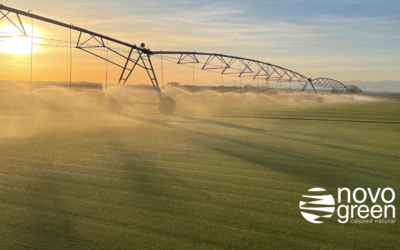
Césped natural y ahorro de agua: criterios reales para elegir mejor
El ahorro de agua se ha convertido en uno de los principales criterios a la hora de diseñar y mantener jardines, zonas verdes, instalaciones deportivas y campos de golf.

Preparing the ground for natural grass: mistakes that affect the outcome
Soil preparation is one of the phases that most influences the subsequent performance of a lawn. It affects root development, water infiltration and availability, drainage, nutrition, and ultimately, the lawn's ability to withstand heat, drought, foot traffic, and other stress factors.

Guide to choosing natural grass: varieties, turf, seeds, installation and maintenance
Choosing natural turf with professional judgment requires looking far beyond the color, texture, or price of a variety. A turfed surface is a living system in which genetics, climate, soil, water, radiation, usage intensity, planting method, and management interact. When one of these variables is ignored, the result may be satisfactory for the first few weeks but, in the medium term, lose density, uniformity, or resilience.

Types of natural grass: which variety to choose according to use and climate
At first glance, many types of natural grass may appear similar. However, their behavior can be very different when factors such as climate, hours of sunlight, water availability, or the level of maintenance the lawn will receive are considered.

Natural turf for professional gardens: how to choose the right solution
The choice of natural grass for professional gardens should be approached as an agronomic decision integrated into the design and future management of the green space. In hotels, housing developments, resorts, corporate headquarters, or residential complexes, it is not enough to consider only the visual result: the surface must respond appropriately to the environmental conditions and the intended use.
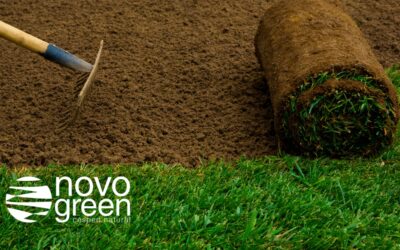
What factors should you consider before choosing a natural lawn?
When considering installing natural grass, it's common to focus on the end result: a green, uniform, and pleasant lawn year-round. However, the success of a project depends not only on the chosen solution but also on the prior analysis conducted.
When and how to water newly laid lawns
Learn more
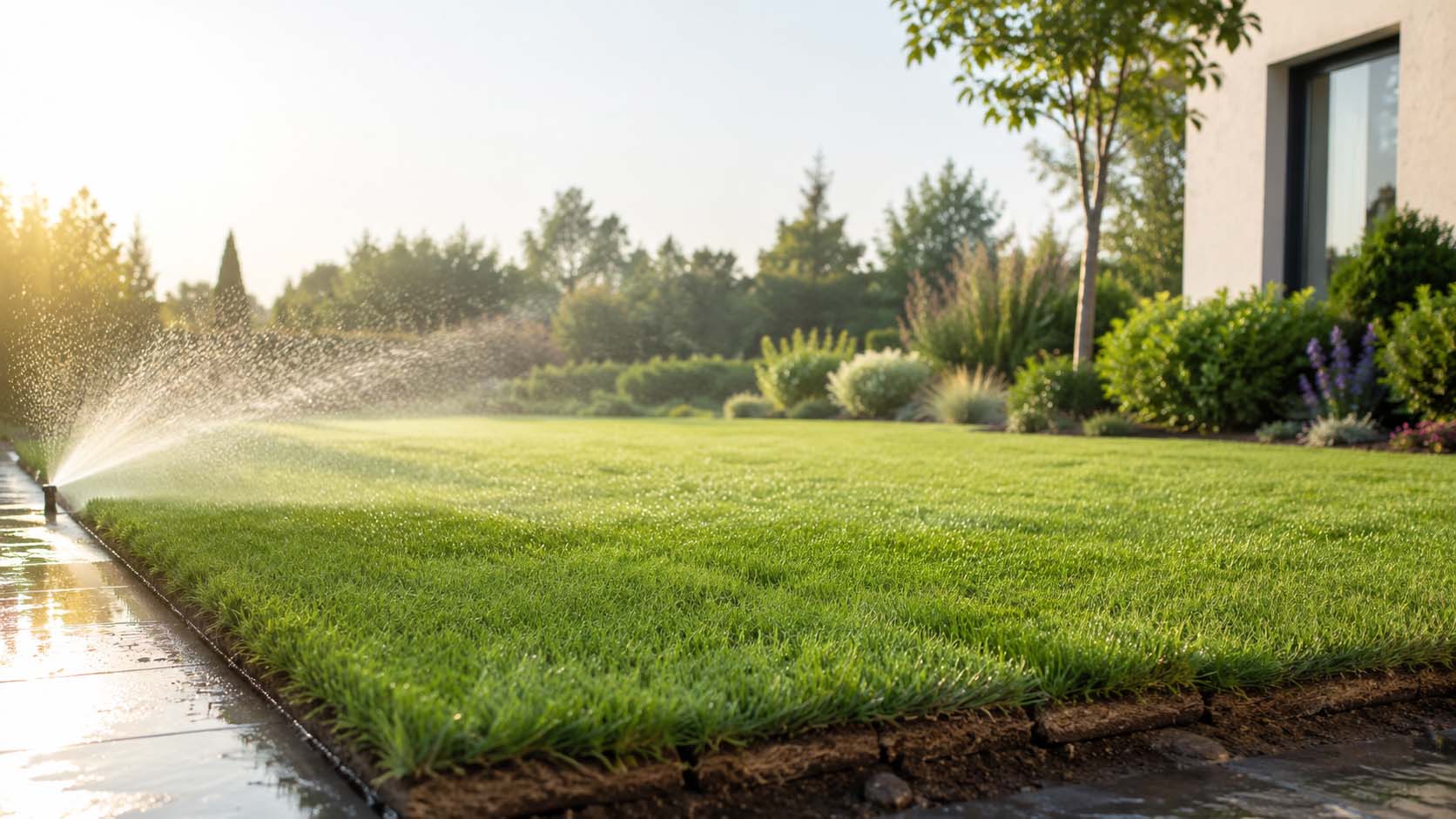
During the first few days the soil should be kept moist to a depth of about 8 cm.
This usually involves short and frequent waterings (morning and evening); in warm climates, between 3-5 waterings, avoiding the middle hours of the day.
As the days go by, watering is reduced to allow the lawn to develop deep roots.
Around days 15-20, daily watering is sufficient.
After 25-30 days, a normal maintenance pattern is implemented with a weekly application of about 20-25l/m2, including rain, always monitoring the areas that dry out faster.
This approach promotes rooting and avoids fungal problems caused by excess moisture.
The type of soil influences: Sandy soils drain quickly and may require more frequent watering, while clay soils retain moisture and need less water. It's important to water early in the morning to make the best use of the water and reduce evaporation. Avoid watering at night to prevent the lawn from remaining wet for extended periods.
✅ Final recommendation
At Novogreen, we have high-quality turf rolls ready for installation. If you have any questions about watering your new lawn, contact us and we'll advise you.
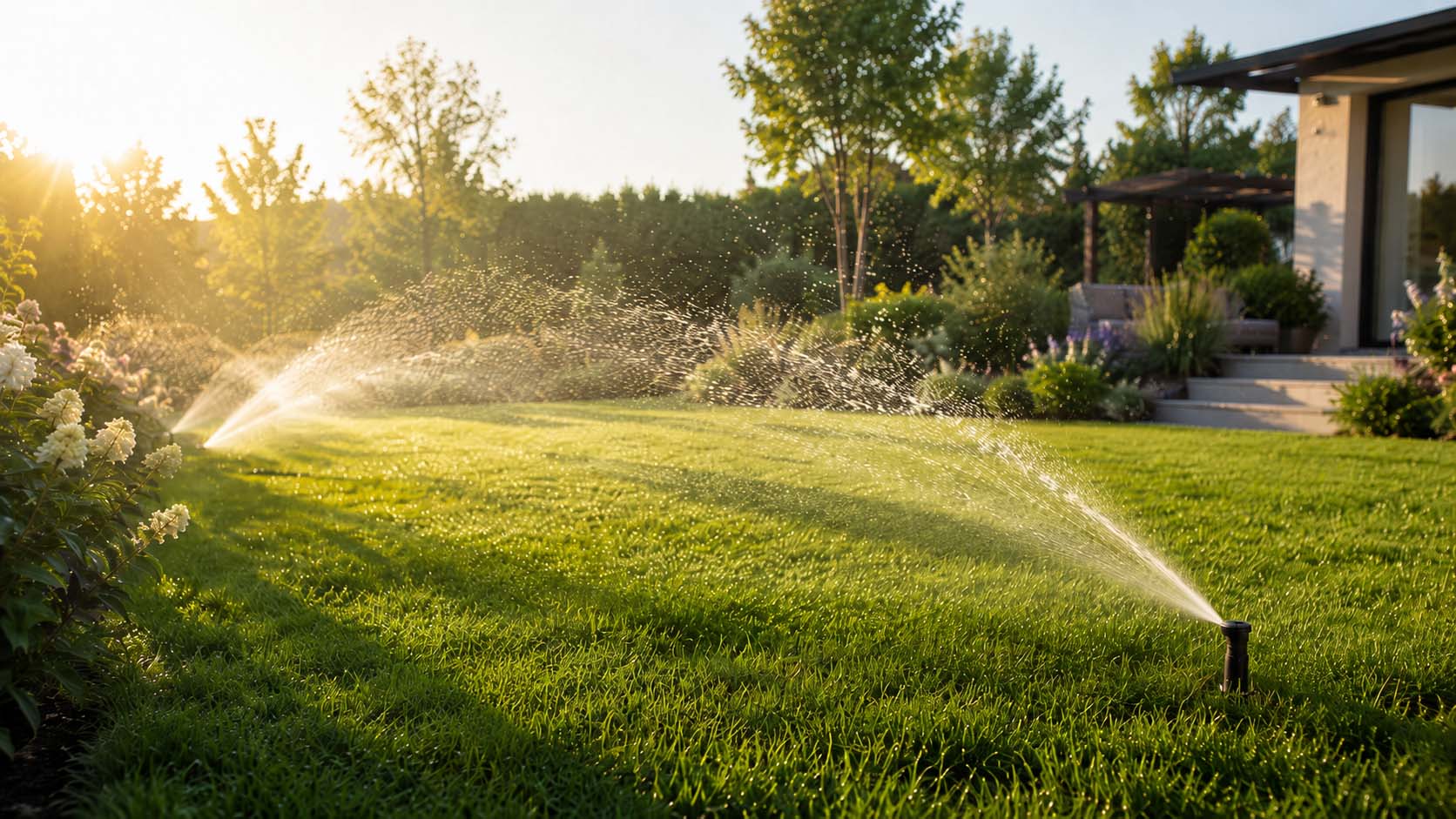
Efficient lawn irrigation in summer
Learn more
It is essential to differentiate between drought and disease: if the lawn recovers quickly after watering, it probably just needs more water; if it does not improve, there may be a fungal problem.
TIPS:
• Sandy soils require more abundant irrigation, while clay soils, retaining more moisture, require shorter irrigation periods.
• Avoid excessive water, as it promotes disease.
• If you have recently installed turf, watering should be for short but very frequent periods during the first week; gradually reduce watering as the lawn becomes established.
✅ Final recommendation
Our natural turf is adapted to different climates. Contact Novogreen to choose the most suitable grass and optimize watering in summer.
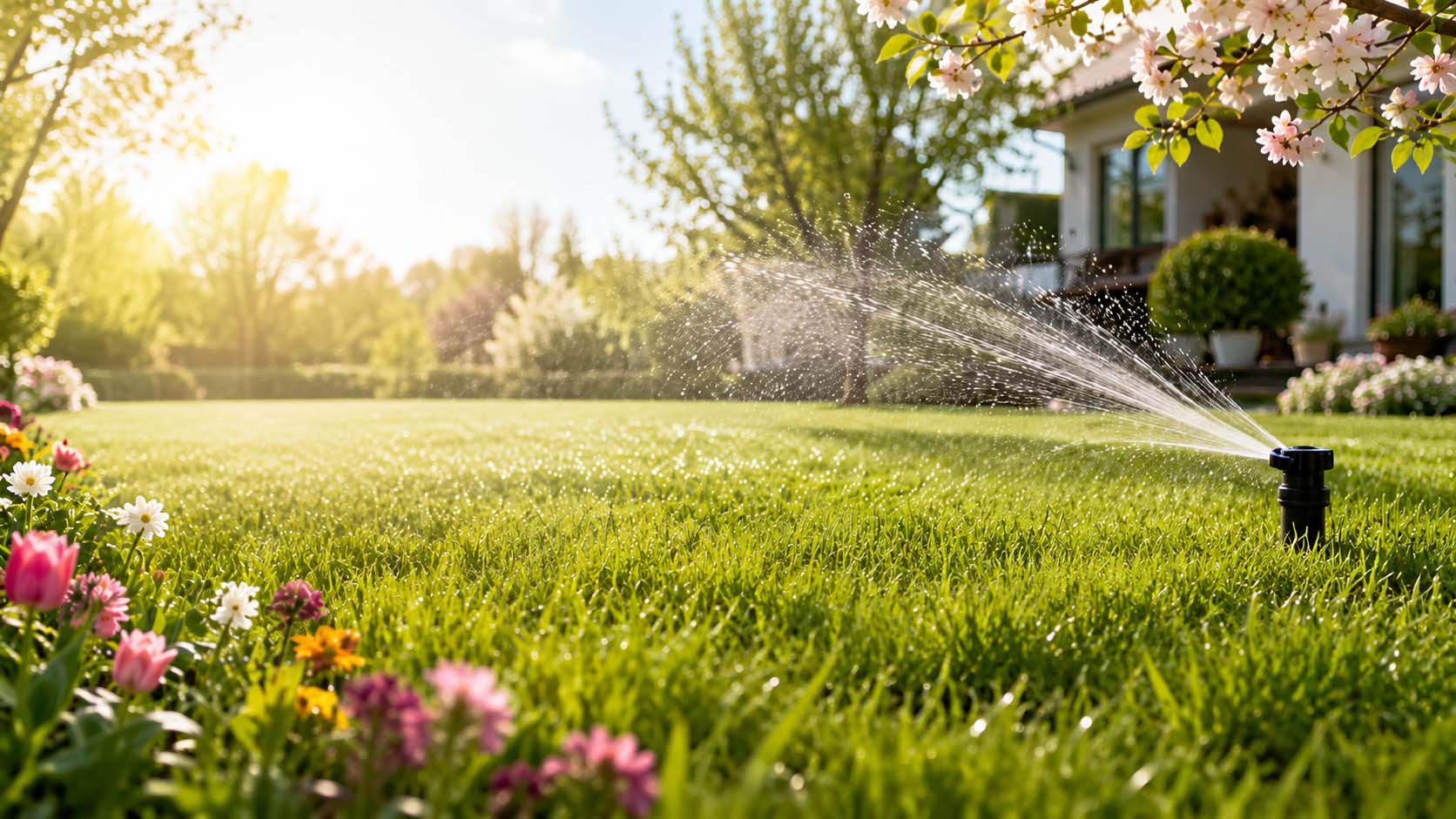
Spring watering: how much and when to water your lawn
Learn more
A common mistake is applying surface watering every day; this creates shallow roots and makes the lawn dependent on constant watering.
The key is to water deeply once or twice a week, moistening the soil to a depth of 15 to 20 cm. This pattern encourages the roots to grow deeper and improves drought tolerance.
TIPS:
• Adjust watering times according to your soil: sandy soils require long sessions, while for clay soils it is better to adjust watering to shorter sessions.
• Observe the symptoms of lack of water (wilted leaves, footprints) and excess water (puddles, yellowing color).
• Avoid watering in the afternoon or evening to prevent fungal growth, and take advantage of spring rains to reduce watering.
• Checking your irrigation system at the start of the season will help you detect clogged nozzles and ensure even coverage.
✅ Final recommendation
At Novogreen we help you schedule your spring irrigation and select the ideal turf for your garden.
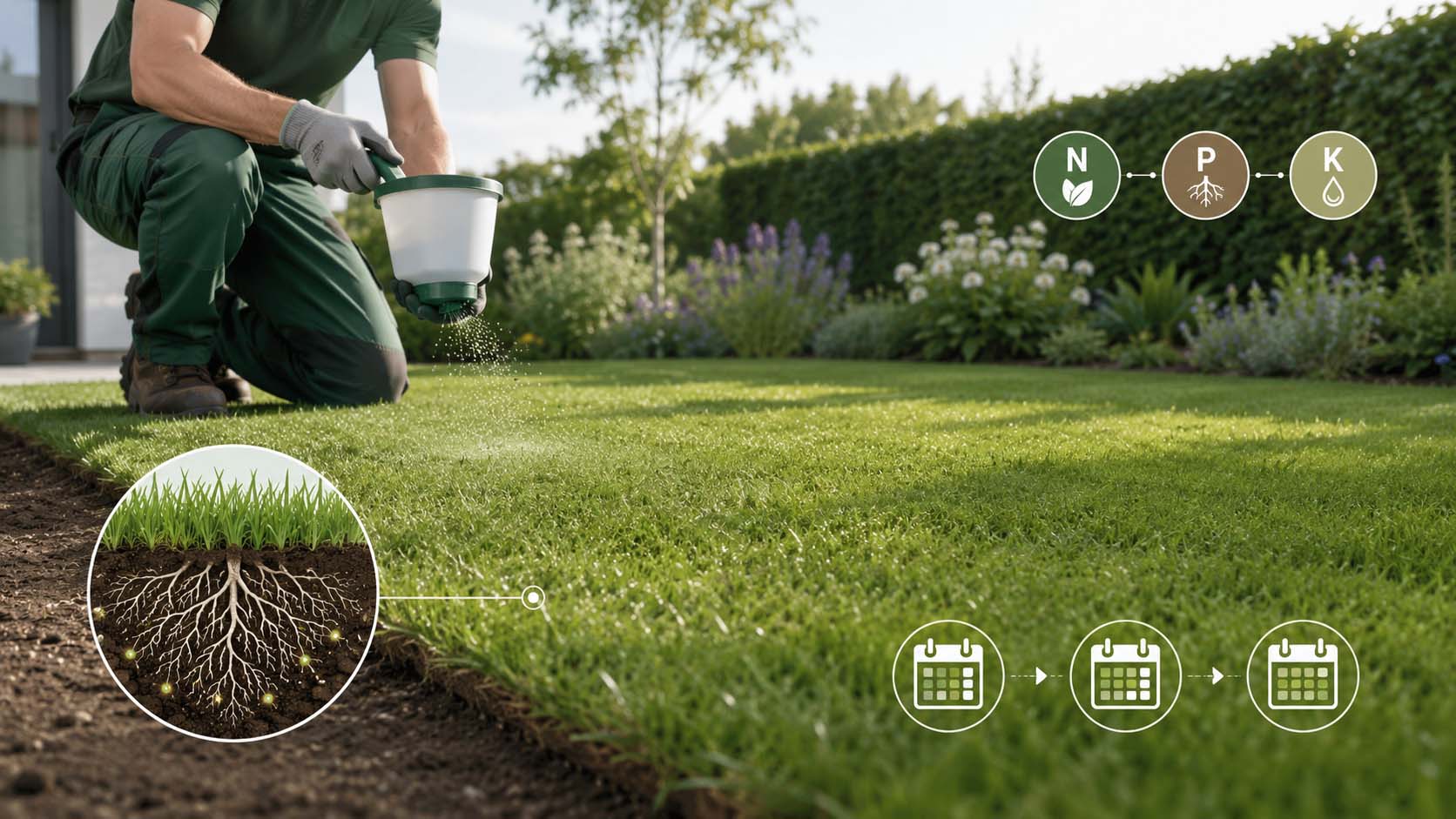
Fertilizing newly laid lawns: nutrients and schedule
Learn more
During the first few weeks it is advisable to follow a schedule:
In the first week, water thoroughly and apply a growth formula;
In the second step, check for fungi and replenish nutrients if necessary;
In the third week, apply a maintenance fertilizer.
After the first month, the lawn can be integrated into your garden's normal fertilization cycle.
Choose liquid or granulated formats depending on ease of application.
✅ Final recommendation
Consult the fertilization schedules for the varieties of natural grass from Novogreen; remember that each species requires specific care.
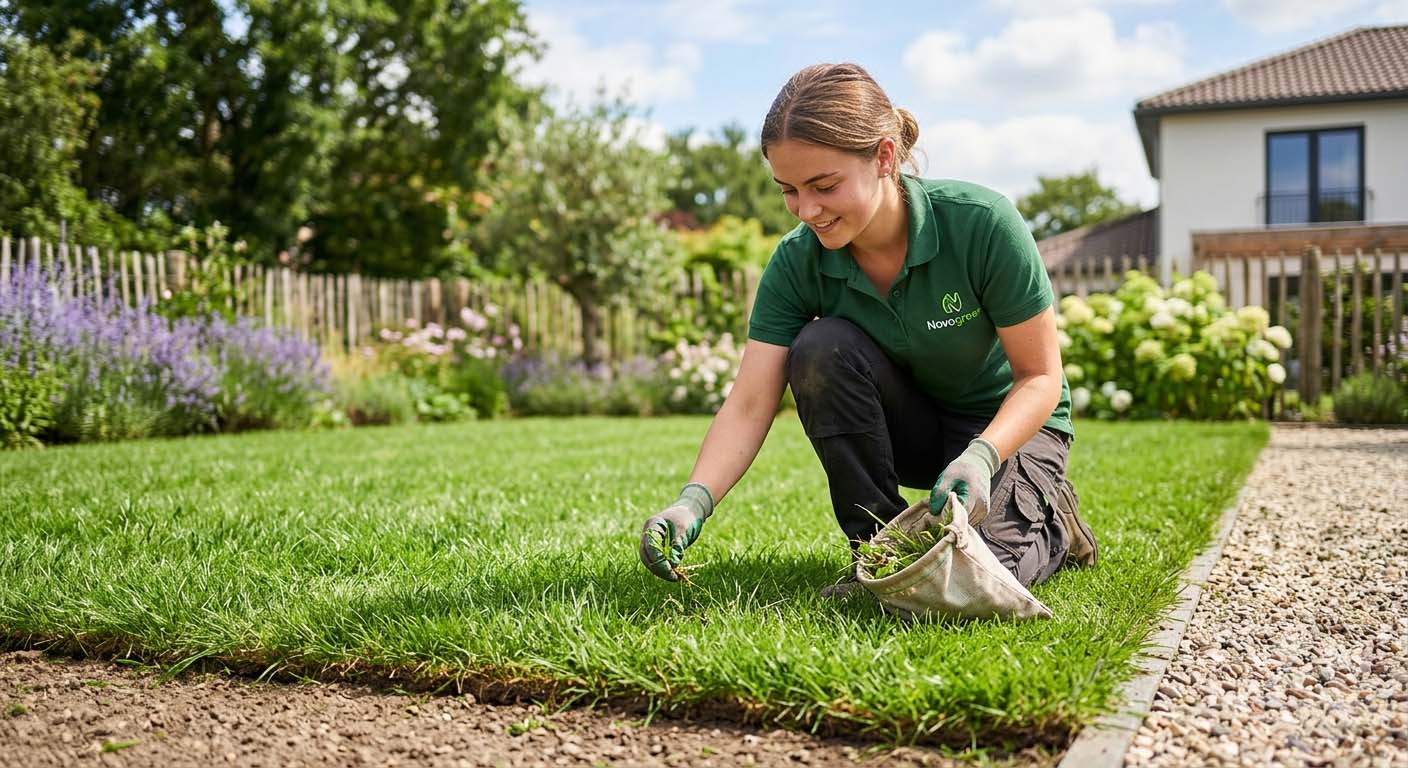
Weed control in newly laid lawns: when and how
Learn more
The lawn should not receive herbicides until it has been mowed 3 or 4 times, that is, when it is already well established.
Selective post-emergence herbicides can be applied subsequently in a localized manner.
Pre-emergent products that prevent seed germination are not recommended until several months have passed because they could hinder root development.
Before laying the turf, it is essential to eliminate existing weeds using a non-selective herbicide; this minimizes competition during the rooting process.
Once the lawn is established, proper management of watering, fertilizing, and mowing will help keep it dense and healthy, reducing the appearance of weeds.
✅ Final recommendation
Novogreen offers varieties whose root density hinders weed growth; ask about our weed-resistant natural grass varieties.
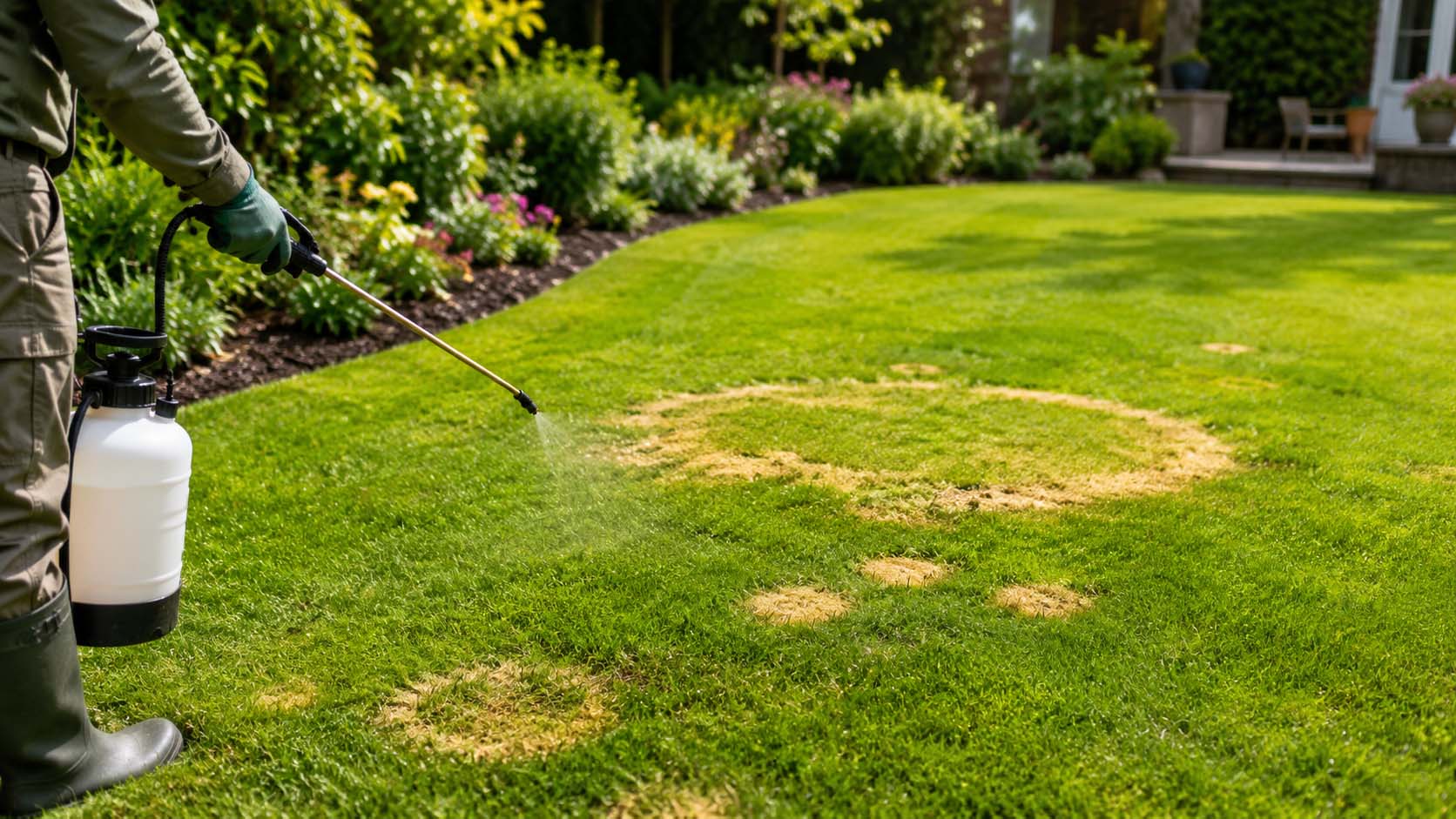
Identification and control of lawn diseases
Learn more
To stop them, you have to act as soon as the first circles or discolored spots appear.
A systemic fungicide applied in time reduces infection and protects the rest of the garden.
TIPS:
• It is important not to fertilize with nitrogen before treatment, as this nutrient promotes the development of the fungus.
• During treatment, avoid walking on or mowing the affected area to prevent spreading spores; repeat the application after three weeks if symptoms persist.
• Good maintenance practices —deep but spaced-out watering, regular mowing without scalping, and well-drained soil— help prevent the onset of diseases.
Remember that a healthy lawn with deep roots is the best shield against pathogens.
✅ Final recommendation
Novogreen offers varieties with high disease resistance that represent significant savings in fungicide costs and allow you to enjoy the best sustainable garden.
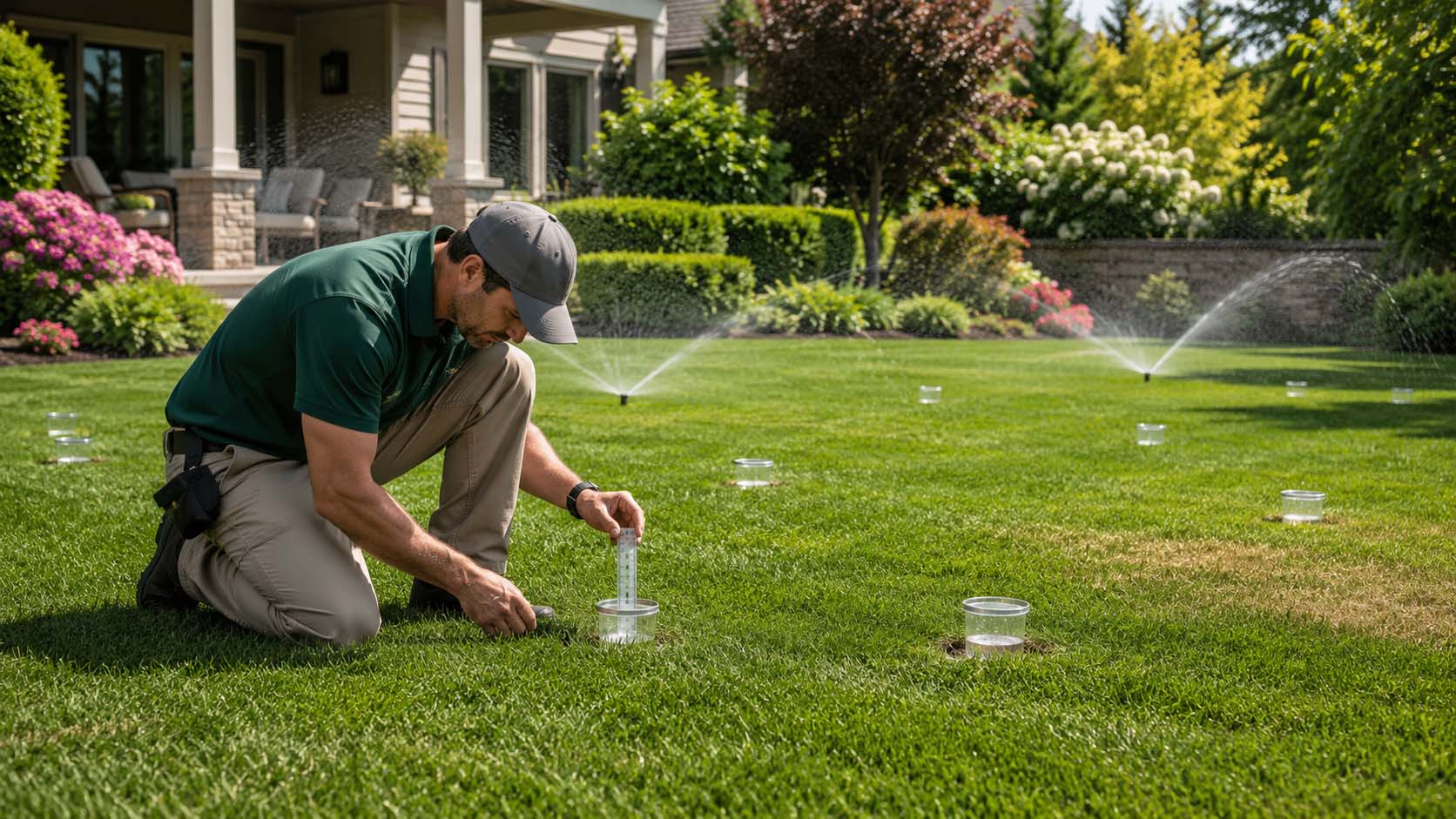
How to audit your irrigation system to save water and improve your lawn
Learn more
Then measure the accumulated water: ideally, you should reach approximately 1.25 cm per session to achieve a total of 2.5 cm per week.
If some areas receive less water, adjust the timing or nozzles to ensure even distribution.
This practice helps you avoid overwatering (which promotes disease) and underwatering (which creates dry patches). It also allows you to tailor watering to the different needs of each area of the garden and save water.
Remember to check your irrigation system at the beginning of each season to detect leaks or blockages.
✅ Final recommendation
You can reduce your water footprint by up to 40% by using natural grass varieties adapted to drought and heat. Find out more! At Novogreen, we help you choose from natural grass varieties with low water requirements so you can use less water.
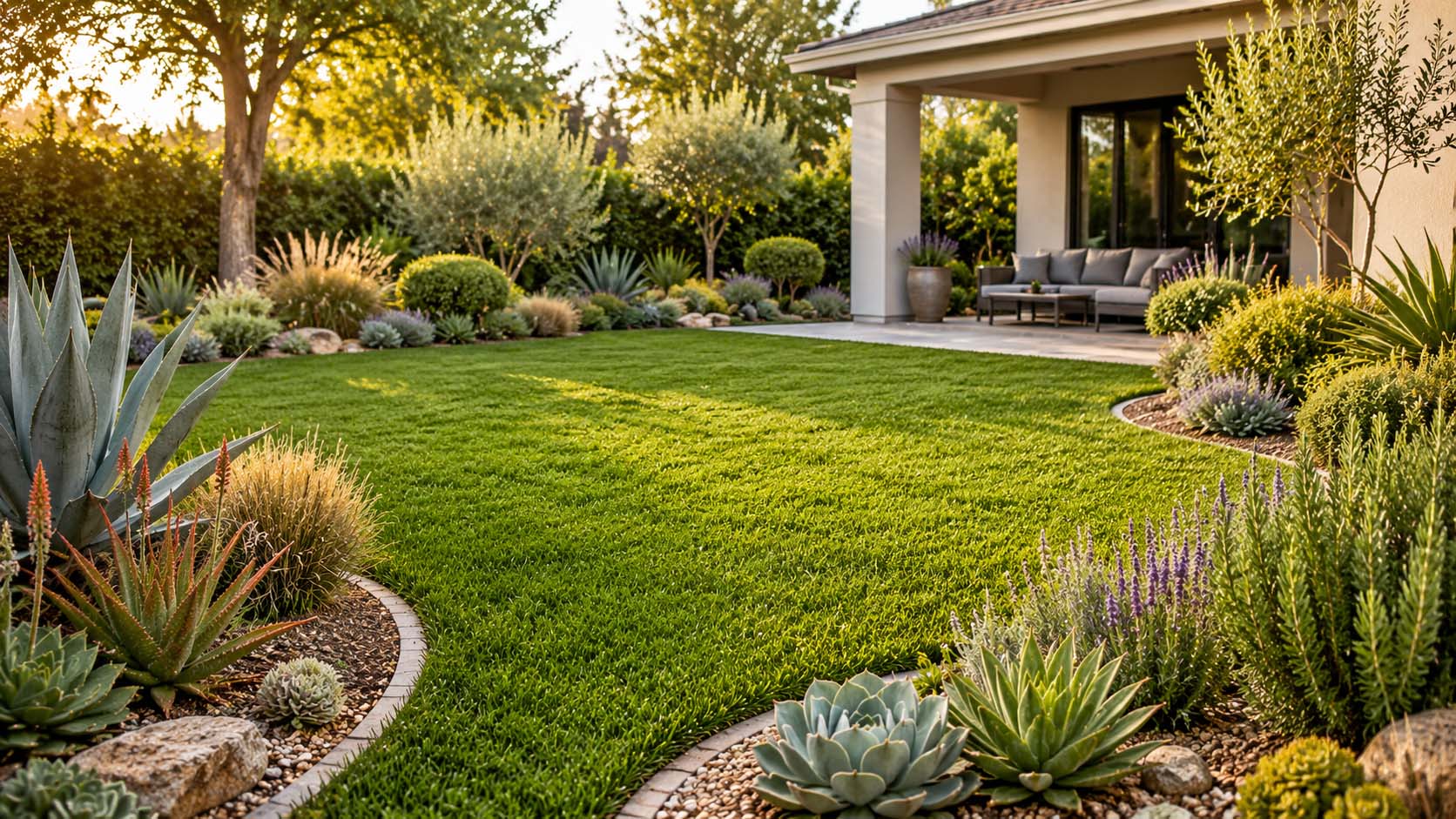
Tips for saving water with a natural lawn
Learn more
The first thing is to choose a variety with low water requirements.
Varieties of natural grass such as Zoysia Zeon o Zoysia Empire o Bermuda TifTuf They don't need much water, and excessive watering should be avoided: less than 2.5 cm of water per week. This type of natural grass reduces water consumption by 251-301% and, in extreme conditions, can be maintained with even half (501% less) of water.
If you use sustainable varieties to save water, remember:
Turn off the irrigation when it rains and adjust the frequency according to the season.
Conducts irrigation audits to check uniformity and adjust timings.
If you live in a dry climate or area with restrictions, consider installing drought-tolerant grass varieties that can go dormant during dry periods, such as Bermuda TifTuf.
Even these species require minimal watering and proper practices: deep but infrequent watering, mowing at the recommended height, and balanced fertilization. Gradually reduce watering in spring and autumn, increase it in summer, and stop watering altogether in winter if the lawn is dormant.
A healthy, well-maintained lawn makes better use of every drop of water.
✅ Final recommendation
Browse our natural grass varieties adapted to your climate and discover how Novogreen can help you save water without sacrificing a quality garden.

First mowing of the new lawn: when and how to do it
Learn more
Check that the turf offers resistance when you pull on it; this indicates that small white roots have appeared.
For the first cut, set the mower to the highest setting to remove only the top portion of the leaves and no more than one-third of their length. A high cut encourages lateral growth and helps the turf rolls bond together.
Before mowing, check the equipment: make sure the blades are sharp, check the tire pressure (to avoid compacting the soil), remove any remaining grass, and plan the route.
Avoid mowing when the soil is too wet and work at a slow speed to avoid uprooting the turf.
Follow the third rule in subsequent mowings as well, and maintain an appropriate fertilization and watering program to facilitate lawn density.
✅ Final recommendation
For areas where mowing cannot be done regularly, such as pools or terraces, Novogreen suggests using zoysias Premium plans that allow you to go up to 3 months without needing to be cut off.
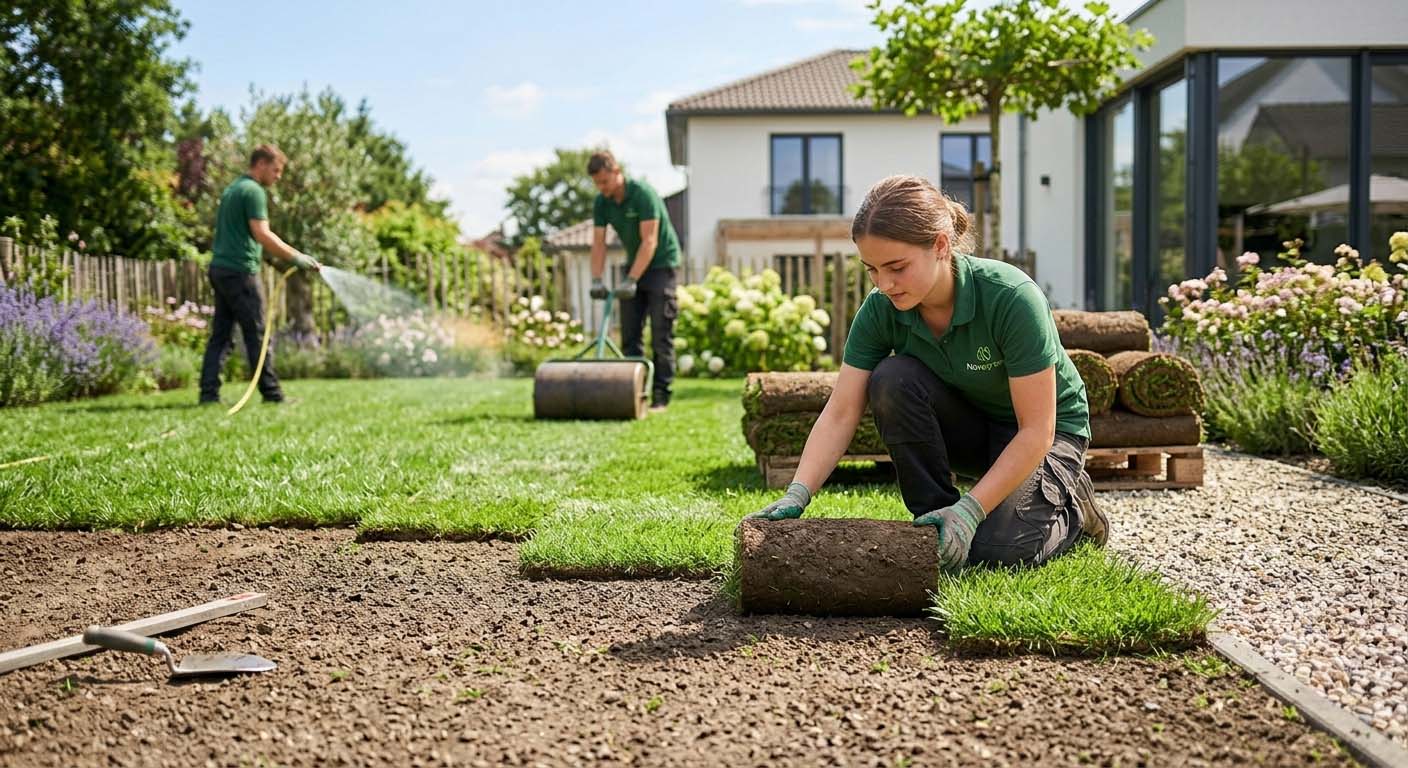
How to lay turf in summer: a step-by-step guide
Learn more
A laboratory analysis indicates the nutrient level and pH, allowing deficiencies to be corrected before installation.
Next, choose the type of grass appropriate for your garden's climate and light conditions; research the characteristics of each type and its maintenance requirements. Calculate the area to be covered in square meters to purchase the correct amount of turf.
The next step is to remove any existing grass or vegetation with a non-selective herbicide, applying it 10-14 days beforehand and then removing the top layer of soil. Once the area is clear, prepare and level the ground: break up any compaction with a rake, tiller, or hoe, add organic matter and any necessary amendments based on soil analysis, and smooth the surface. Lightly moisten the soil just before laying the turf.
Installation should be quick: lay the turf rolls in a brick pattern with staggered seams, place them as close together as possible, and roll over them to ensure good contact with the ground. It is important that the rolls do not remain stacked for more than 24 hours, as the heat can damage them.
Then water thoroughly so that the substrate is soaked and apply a fertilizer rich in phosphorus to promote rooting.
Keep the soil hydrated during the first few weeks and follow summer watering recommendations to avoid water stress.
Wait until you have mowed 3-4 times before using herbicides.
Proper maintenance will allow your new garden to successfully withstand high temperatures.
✅ Final recommendation
Trust Novogreen for your guaranteed supply of turf, even in summer.