



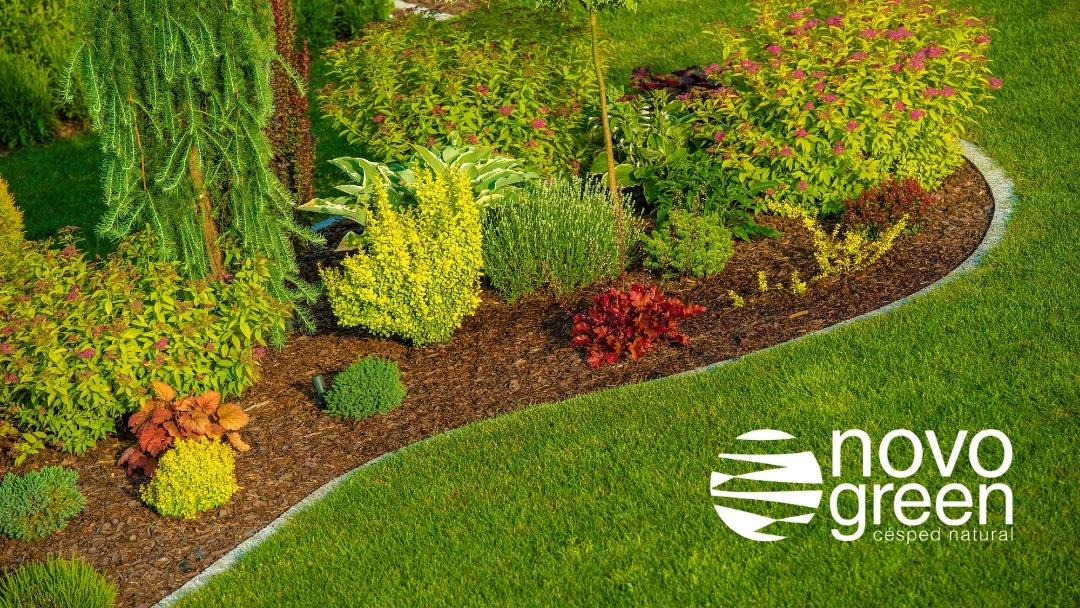
The choice of Natural turf for professional gardens It must be approached as an agronomic decision integrated into the design and future management of the green space. In hotels, housing developments, resorts, corporate headquarters, or residential projects, it is not enough to consider only the visual result: the surface area must respond appropriately to the surrounding conditions and the intended use.
Unlike a domestic garden, in this type of project The selection of the grass directly influences its subsequent evolution.. The density of the cover, the capacity for recovery, the response to stress or the maintenance needs depend to a large extent on whether the chosen variety is suitable for the actual conditions of the project.
Therefore, the choice must respond both to the landscape design and to agronomic criteria for establishment, performance and maintenance.
Table of Contents
Each professional garden pursues a different goal.
Each professional garden is created with a different purpose. This reality means that The choice of grass should be adapted to the role it will play within the project and the level of demand that he will have to assume.
In some areas, ornamental quality will be more important. In others, the priority will be to withstand continuous use, reduce water requirements, or maintain stable performance during the most unfavorable months.
Before defining the solution, it is especially important to consider several aspects:
- the climatic conditions and microclimate of space
- the characteristics of the soil and available water
- the intensity and type of intended use
- the level of maintenance that can be assumed
The goal is not to find a universal species or variety, but identify which plant material offers a more balanced behavior within those conditions.
Varietal breadth takes on special relevance here.. NOVOGREEN works with different varieties of natural grass, including solutions and materials selected to meet specific needs for resistance, water efficiency or climate adaptation.
The choice changes depending on the type of project
Natural grass can be subject to very different agronomic conditions depending on the project. An ornamental surface with limited access does not require the same features as a community area used daily or a large landscaped area subject to irrigation restrictions.
Understanding the future functioning of the space allows for more precise selection of varieties and prevents the decision from being based solely on initial appearance.
Gardens that aim to create a first impression
Hotels, resorts, villas, and tourist complexes understand the garden as part of the visitor experience. In these establishments, uniformity, density, and visual quality are of particular importance.
However, The ornamental criteria must be accompanied by proper agronomic adaptation. A visually appealing lawn will not be a good choice if it subsequently shows difficulties with sunlight, water salinity, high temperatures, or specific maintenance conditions.
In warm or Mediterranean areas, for example, it may be more appropriate to work with varieties developed to better tolerate heat and water stress. When saline influence is present, varietal selection becomes even more important.
NOVOGREEN has adapted materials to this type of scenario, including Varieties developed for high salinity conditions or with lower water needs.
Spaces to live together and enjoy every day
Residential communities, common areas, and recreational areas need surfaces capable of to withstand continuous use without losing density or functional quality.
In these cases, it is especially important to consider the following factors:
- tolerance to trampling
- the ability to recover after wear and tear
- the speed of growth and closure of the damaged areas
- surface stability during periods of increased stress
It's also advisable to adjust the choice to the level of maintenance available. On large areas, small differences in mowing, fertilization, or irrigation needs can translate into significant differences in annual management.
Therefore, resilience should not be understood solely as the ability to withstand foot traffic. How the turf responds to intensive use, heat, water stress, or disease pressure is also important.
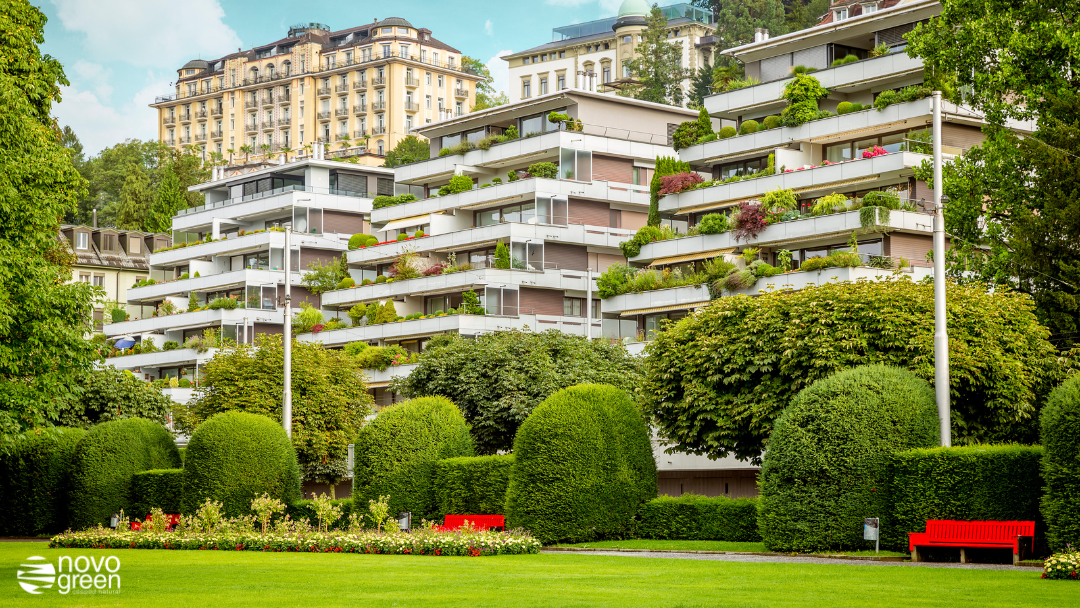
Gardens that represent an identity
Corporate spaces and prestigious areas use green spaces as an extension of their image. From an agronomic perspective, maintaining this function requires achieving a homogeneous and predictable surface for as long as possible.
This is where aspects such as the following come into play:
- density
- leaf texture
- the color
- the seasonal response of each variety
Not all solutions maintain the same appearance throughout the year. Nor do they respond in the same way to cutting heights, high temperatures, or stressful situations. Therefore, the ornamental aspect must be balanced with the actual ability to maintain the surface in optimal condition.
A properly adapted variety usually offers a more stable result than one chosen exclusively for its initial appearance, but with greater management requirements.
Large projects where planning makes all the difference
New construction developments, landscaping projects and large landscaped areas require a global vision from the early stages of design.
Before selecting the variety, it is advisable to study the land and anticipate possible limitations. Drainage, the effective depth of the soil, water quality, or the distribution of shaded areas can significantly influence subsequent behavior.
Logistics also plays a particularly important role in these types of projects. Turf is a living plant material and The time between harvest and installation should be reduced to a minimum, especially during the warmer months.
NOVOGREEN has production distributed across different areas of the Peninsula, a structure that allows both the supply and the varieties to be adapted to the conditions of each project and reduces the time between harvest and delivery.
| Type of space | Top priority | Factors to consider |
| Hotel / resort / villa | Visual quality and uniformity | Density, adaptation to heat, salinity and maintenance. |
| Residential/recreational area | Resistance to use | Trampling, recovery, damage closure and stability. |
| Corporate space | Homogeneous and stable image | Density, texture, color, and seasonal response. |
| Large landscaped area | Balance between performance and management | Soil, water, shade, logistics and maintenance needs. |
Thinking beyond the installation
In a professional garden, the result is not measured solely on the day the work is completed. A good choice is one that maintains its functionality and quality. after successive seasonal cycles and under the actual conditions of use.
Therefore, varietal selection must also be done with future maintenance in mind.
A stable surface should allow for balancing three major objectives:
- Maintain a dense and uniform plant cover
- Responding appropriately to stress and burnout
- Adjust maintenance needs to available resources
Varietal evolution has allowed the development of materials specifically selected for parameters such as tolerance to drought, salinity, disease, or high temperatures. NOVOGREEN works with varieties that respond to this approach, facilitating a selection more closely aligned with the agronomic context of each project.
Thus, a correct initial decision can help reduce corrective interventions, optimize water use, and facilitate surface management.
A solution tailored to each professional project
No two professional gardens are exactly alike, and therefore there is no single solution that works for all of them.
The selection must begin with a technical diagnosis that allows identifying what characteristics the surface really needs and what level of maintenance can be assumed subsequently.
At NOVOGREEN we work with a wide range of natural grass varieties to tailor the solution to the specific needs of each project. The company combines production experience, technical expertise, and selected and certified varieties to work alongside landscape architects, agronomists, gardeners, project designers, and managers of large landscaped areas.
The goal is not only to decide which turf to install, but to identify which solution offers the best balance between agronomic adaptation, functionality, ornamental quality and long-term performance.


